

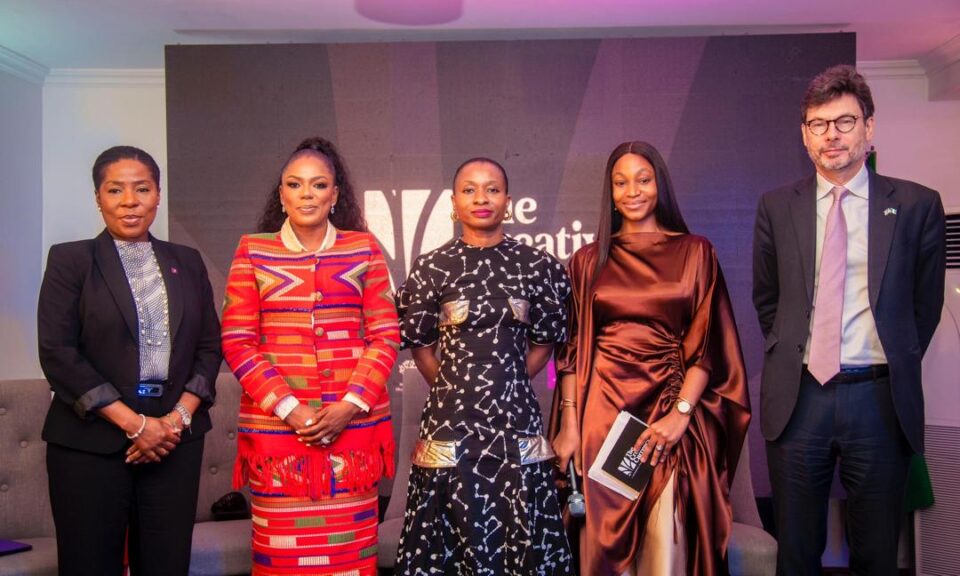
In a landmark move to strengthen Nigeria’s creative economy, Woodhall Capital, in partnership with Polaris Bank, the Lagos State Government, and the UK Government, has launched a ₦1.5 billion Creative Sector Fund aimed at expanding access to structured financing for creative entrepreneurs across film, fashion, music, and digital content industries.
The fund was officially unveiled at the launch of the Creative Currency Podcast, a new platform designed to foster collaboration between creatives, financiers, policymakers, and global stakeholders. The initiative not only provides capital but also targets deeper challenges in the creative ecosystem, such as limited financing, weak intellectual property enforcement, and lack of scalable infrastructure.
Recognizing Creativity as Capital
Speaking at the event hosted at the Ikoyi residence of the British Deputy High Commissioner, Polaris Bank’s Executive Director, Abimbola Ozomah, emphasized that the creative sector has long been excluded from formal financial systems.
<span;>> “This fund represents more than capital—it reflects our belief in Nigerian creativity as a global force,” Ozomah said. “We’re not just exporting talent. We’re exporting ownership, structure, and long-term value.”
Mojisola Hunponu-Wusu, Founder and CEO of Woodhall Capital, reiterated the fund’s commitment to delivering bespoke financial products and advisory services tailored to the needs of creative micro, small, and medium enterprises (MSMEs). She stressed the importance of shifting financial thinking to recognize intellectual property as a bankable asset.
International and Governmental Backing
Representing the UK Government, British Deputy High Commissioner Jonny Baxter highlighted the UK’s continued investment in Nigeria’s creative industries. He cited the UK-Nigeria Creative Industries Partnership signed in 2024 as a major milestone in fostering international cooperation.
On the Nigerian side, Mrs. Folashade Ambrose-Medebem, Lagos State Commissioner for Commerce, Cooperatives, Trade and Investment, reaffirmed the state’s ambition to position Lagos as Africa’s creative capital. She noted that the state has introduced zero-interest loans of up to ₦10 million through the Lagos Creative Fund, alongside other infrastructure and policy reforms to support the sector.
A New Voice for the Sector
The Creative Currency Podcast, now launched, will function not only as a media platform but also as a policy engagement forum. By bringing together creatives, investors, legal experts, and cultural stakeholders, the platform aims to identify opportunities, address risks, and push for systemic reforms in the industry.
Throughout the event, panelists emphasized the need for transparency, professionalism, and structure in the creative sector. Creators were encouraged to treat their work as businesses—maintaining financial records, protecting intellectual property, and pursuing formalized business models.
Shifting the Financial Narrative
The fund also signals a broader shift in how financial institutions assess risk in the creative economy. Panelists urged banks to adopt alternative risk models that consider the unique revenue streams and asset structures of creative enterprises.
Investing in Systems, Not Just Stories
The event concluded with a collective call to action: build the systems that will make Nigeria’s creative economy thrive. Stakeholders agreed that with the right structure, funding, and policy support, Nigeria can become a global powerhouse in creative exports, job creation, and cultural influence.
Polaris Bank’s role in this initiative aligns with its broader commitment to MSME growth, having already deployed billions of naira in loans to support micro, small, and medium businesses across Nigeria.
