

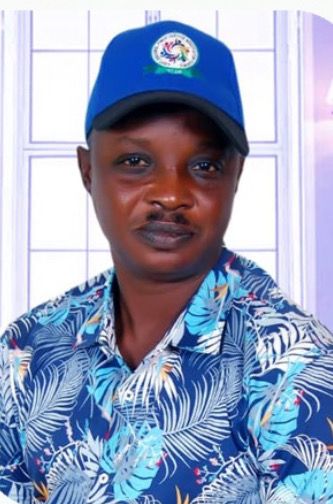
By DAYO ADESULU
The Ogun State Council of the Nigeria Labour Congress (NLC) has raised serious concerns regarding the administration of Governor Dapo Abiodun, alleging that no contributions to the contributory pension scheme have been made since he took office six years ago.
In a recent interview on Eagle 102.5 FM’s “Frontline” program, NLC State Chairman Comrade Hameed Ademola-Benco stated that the decision to withdraw services across the state workforce was a direct response to the government’s prolonged non-compliance with the Contributory Pension Scheme, which was established in 2008 under former Governor Gbenga Daniel.
On July 16, 2025, workers represented by Organized Labour initiated an indefinite strike, calling for an immediate suspension and review of the state’s pension reform law. They highlighted a troubling history of neglect, claiming that successive governments over the past 17 years have failed to remit contributory pension funds, accumulating an outstanding debt of ₦82 billion.
Benco criticized the Abiodun administration, stating that while the Daniel administration remitted 25 months of pension deductions and Senator Ibikunle Amosun’s administration contributed just eight months, Abiodun’s government has not made any contributions from a backlog of 184 months. “In the past six years of Governor Abiodun’s administration, no remittance has been made,” he declared.
Despite ongoing dialogues with the state government, Benco noted that essential elements of the pension law remain unaddressed, including the calculation of past service years into pension premiums, the inauguration of a Pension Board, and the establishment of regulatory structures to oversee the scheme. “We have been interfacing with the present government to make them see reason why this bill cannot take off yet,” he added.
Although the Ogun State Pension Reform Law was amended in 2013 with an intended implementation date of July 1, 2025, Benco emphasized that the necessary legal and administrative frameworks are still lacking.
The strike, which commenced on Tuesday, has led to widespread disruptions as workers from various ministries and agencies have ceased operations in protest. Labour unions are also advocating for the payment of outstanding leave allowances, timely issuance of promotion letters, and the full implementation of salary adjustments in line with the national minimum wage.
Benco described the recent ₦42,000 salary increment as insufficient, referring to it merely as a “salary award.” He argued that the adjustment fails to reflect the true cost of living, which should adequately address basic needs, utilities, and housing.
He further revealed that no formal committee was established to oversee negotiations regarding these issues. “It was the organized labour that discussed and negotiated with the government,” he explained, noting that no binding agreements or timelines were established.
When asked about the possibility of further negotiations with government representatives, Benco reiterated the union’s position, stating that they would only engage directly with Governor Abiodun. “We are not employees of the Secretary to the State Government or any commissioner. We are employees of Governor Abiodun, and he is the only one we are ready to dialogue with,” he asserted.
Despite the ongoing standoff, Benco expressed hope that the governor would eventually engage with the unions. “We are very optimistic he is going to see us,” he remarked, acknowledging the various national responsibilities currently demanding the governor’s attention.
In a show of solidarity, the Ogun State chapter of the Peoples Democratic Party (PDP) has voiced its support for the strike. In a statement from Publicity Secretary Kayode Adebayo, the party described the action as a lawful expression of workers’ rights and emphasized the need for the government to fulfill its obligations.
As the strike continues, organized labour, comprising the NLC, Trade Union Congress (TUC), and Joint Negotiating Council (JNC), has vowed to persist in their demands until all outstanding issues are comprehensively addressed by the state government.
