

By DAYO ADESULU
Distinguished scholar and global public intellectual, Prof. Toyin Falola, has urged Nigerian universities to urgently abandon outdated, authoritarian teaching methods and embrace innovative, student-centred learning models capable of matching the unprecedented influence of Artificial Intelligence on global education.
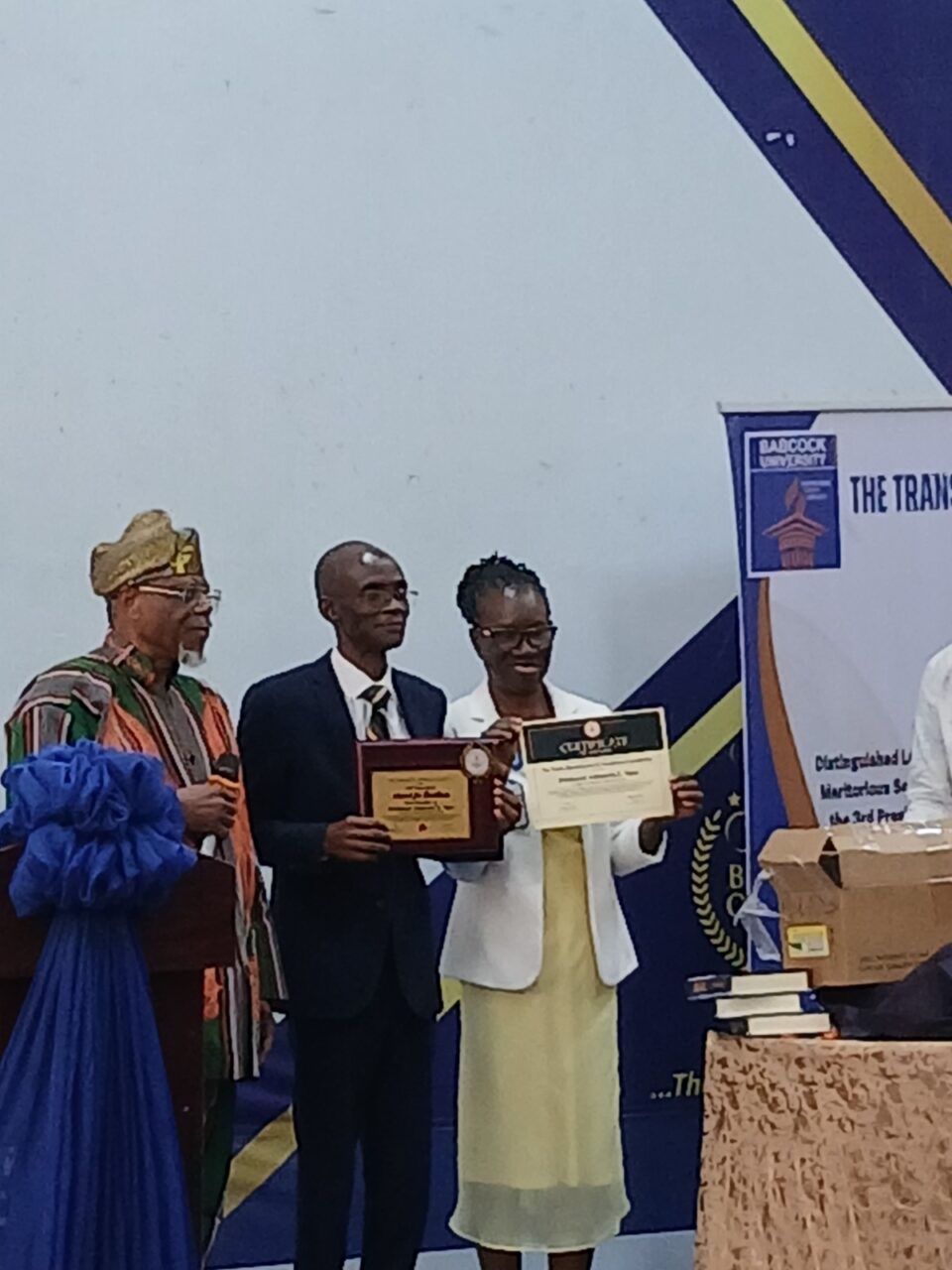
Falola made the call while delivering the Babcock University Valedictory Lecture, titled The Transformation of Babcock, held at the institution’s main campus in Ilishan-Remo, Ogun State. The event formed part of the week-long transition activities honouring outgoing President/Vice-Chancellor, Prof. Ademola Tayo.
AI Is Redefining Learning—Universities Must Adapt, Falola Warns
Falola stated that over 90% of all knowledge traditionally delivered in classrooms is now instantly accessible through AI tools, forcing universities to rethink their pedagogical foundations. Combined with the shorter attention spans of Gen Z and Gen Alpha learners, he argued, institutions must shift toward friendship-driven, engaging, and interactive teaching approaches.
“Artificial Intelligence has already overtaken traditional teaching,” he said. “We cannot rely on old authoritarian models. The new learner needs a proactive, relationship-driven approach that stimulates curiosity and critical thinking.”
The Babcock Transformation Story
Drawing heavily from his newly released book, The Transformation of Babcock, Falola traced the institution’s remarkable journey from humble beginnings to a globally recognised hybrid university. The book—developed from interviews with over a thousand alumni, faculty, and community voices—chronicles the school’s evolution, challenges, and the visionaries who shaped it.
“I worked on this book in secret,” he revealed. “It tells the story of the journey, the setbacks, and the unshakeable pursuit of excellence that brought Babcock to where it stands today.”
Five Key Legacies and the Challenges Ahead
Falola outlined the five major legacies inherited by the incoming President/Vice-Chancellor, Prof. Olutunde Afolarin Ojewole:
Academic expansion
Medical excellence
Full accreditation and quality assurance
Global affiliations
Pedagogic innovation
However, he warned that economic instability, rising energy costs, worsening power outages, and competitive pressures from private and public universities pose serious threats to sustainability.
To confront these challenges, he recommended three urgent priorities:
Secure a $200 million endowment for long-term resilience
Strengthen and expand the alumni network
Establish a Babcock University Institute of Innovation to drive research, entrepreneurship, and digital transformation
He further pushed for cultural diplomacy initiatives, sustainability programmes, and deeper engagement between faith and scientific inquiry.
Honours for Prof. Ademola Tayo
In a symbolic moment, Falola presented outgoing Vice-Chancellor Prof. Ademola Tayo with the Thabo Mbeki Award for Leadership Excellence, conferred through the University of Texas at Austin with the approval of former South African President Thabo Mbeki. The honour recognizes leaders dedicated to Africa’s renaissance and excellence in service.
Additionally, His Imperial Majesty Prof. Fuankem Achankeng I, Paramount Ruler of the Atoabechied Kingdom of Cameroon, bestowed on Prof. Tayo the revered chieftaincy title NkemMiaAkateh, celebrating his integrity and leadership.
“Universities Must Move Beyond Authoritarian Teaching”
Falola ended with a direct appeal to administrators, faculty, and students:
“We must move from authoritarian teaching to models that value relationships, ethical formation, and critical thinking. That is how Babcock will preserve its legacy and shape the future of higher education in Nigeria.”
#BabcockUniversity #ToyinFalola #EducationReform #ArtificialIntelligence #HigherEducation #NigeriaEducation #TeachingInnovation
