

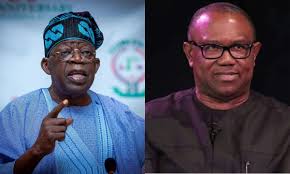
By DAYO ADESULU
Former Labour Party presidential candidate, Peter Obi, has launched a strong critique of the Federal Government’s tax direction under President Bola Ahmed Tinubu, warning that Nigeria cannot build prosperity by deepening the burden on an already impoverished population.
In a personally signed statement released on Friday and titled “Prosperity Cannot Come by Taxing Poverty,” Obi argued that Nigeria’s economic struggles will persist unless leadership shifts from revenue desperation to people-centred governance anchored on integrity, productivity, and transparency.
The former Anambra State governor said history has consistently shown that thriving nations do not grow by squeezing the poor, but by empowering citizens to produce wealth, create jobs, and expand opportunity.
Peter Obi: Honest Leadership Is the Foundation of National Progress
According to Obi, the defining trait of successful leadership across the world is honesty, not propaganda or fiscal pressure.
He stressed that nations that rise above poverty are led by individuals who unite citizens around a shared vision built on trust and truth.
“Transformative leaders—those who successfully unite their people around a shared vision—share a defining quality: honesty. Government must be transparent and truthful because citizens deserve nothing less from those who lead them,” Obi said.
He warned that leadership loses its moral authority once it begins to exploit citizens for the benefit of a privileged few, noting that such governance breeds distrust, resentment, and economic stagnation.
“True leaders do not exploit their people to enrich themselves and a few cronies; they build trust, unity, and shared purpose — the foundation of sustainable progress,” he added.
Taxation Must Be a Social Contract, Not a Punishment
Peter Obi insisted that taxation should function as a social contract rather than an instrument of hardship.
He explained that for citizens to willingly support tax policies, they must clearly understand how such taxes improve their daily lives, infrastructure, security, healthcare, and education.
“If taxation is to function as a genuine social contract, it must be rooted in sincerity, fairness, and concern for the welfare of the people,” Obi stated.
According to him, the absence of transparency turns taxation into a source of confusion and suffering instead of a driver of development.
He warned that when people are asked to pay more without seeing results, trust in government collapses, weakening national unity.
Obi Condemns Revenue-Driven Policies Without Welfare Impact
Obi faulted what he described as a revenue-obsessed fiscal mindset that prioritises government earnings over citizens’ wellbeing.
He argued that the true goal of fiscal policy is not merely to raise funds, but to make people wealthier, thereby strengthening the nation organically.
“The purpose of sound fiscal policy is not merely to raise revenue; it is to make the people wealthier so that the nation itself becomes stronger,” he said.
He lamented that Nigerians are currently being asked to pay more taxes “without clarity, explanation, or visible benefit,” at a time when inflation, unemployment, and cost of living pressures continue to rise.
‘You Cannot Tax Your Way Out of Poverty’
The former governor made a strong case for production-driven recovery, insisting that economic revival begins with empowering small and medium-sized enterprises (SMEs) across the country.
According to Obi, when small businesses thrive, jobs are created, household incomes rise, and the tax base expands naturally without coercion.
“The solution begins with empowering small and medium-sized enterprises in every community. When small businesses thrive, jobs are created, incomes rise, and the tax base expands naturally,” he said.
He added pointedly:
“You cannot tax your way out of poverty — you must produce your way out of it.”
Concerns Over Alleged Tax Law Irregularities
Peter Obi also raised alarm over what he described as a deeply troubling tax fraud controversy, calling it unprecedented in Nigeria’s democratic history.
He claimed that a tax law currently being enforced was allegedly not the same version passed by the National Assembly.
“For the first time in Nigeria’s history, a tax law has reportedly been forged,” Obi said.
According to him, the National Assembly has reportedly admitted that the version of the law gazetted differs from what lawmakers approved, yet Nigerians are being compelled to pay higher taxes under that framework.
He described the situation as dangerous for democracy and the rule of law, stressing that taxation without legality and transparency undermines public trust.
Rising Revenue Means Nothing If Citizens Grow Poorer
Obi cautioned against celebrating increased government revenue figures while ordinary Nigerians continue to struggle with worsening living conditions.
“There is no virtue in celebrating increased government revenue while the people grow poorer,” he said.
He argued that any tax system that deepens hardship contradicts the very essence of good governance.
“Taxing poverty does not create wealth; it deepens hardship,” Obi warned.
Call for a Fair, People-Centred Tax System
In conclusion, Peter Obi called for urgent reform of Nigeria’s tax framework, urging the government to adopt a system that is lawful, fair, and centred on citizens’ welfare.
He said Nigeria needs a tax regime that supports production, rewards enterprise, protects the vulnerable, and restores trust between government and the people.
According to him, only such an approach can turn taxation into a genuine tool for national unity, sustainable growth, and shared prosperity.
#PeterObi #TinubuTaxPolicy #NigeriaEconomy #TaxReforms #GoodGovernance #EconomicGrowth #SMEs #FiscalPolicy
