

By DAYO ADESULU
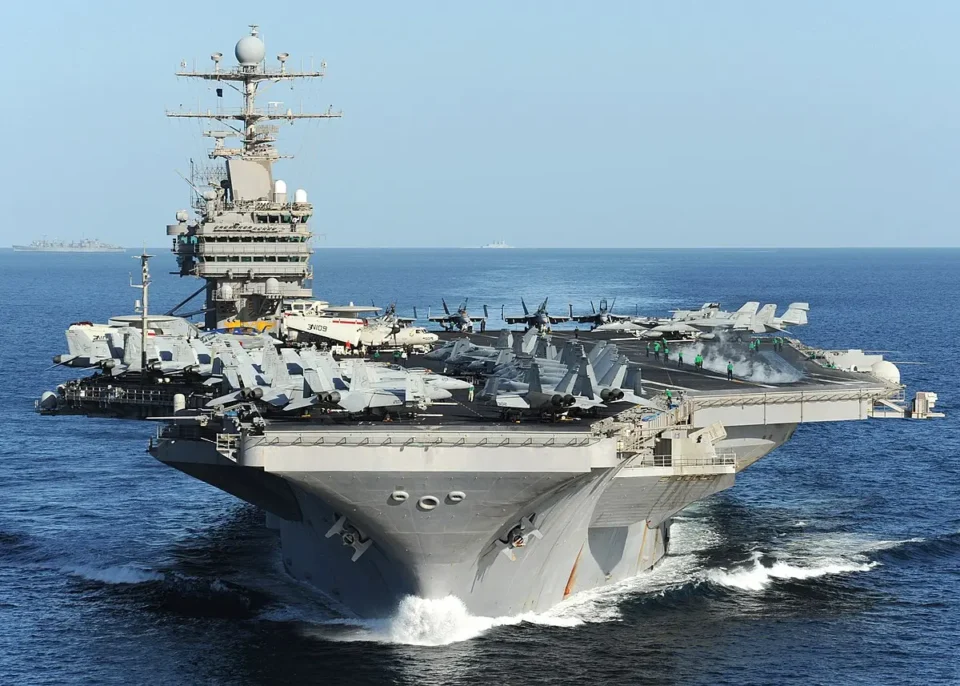
The sudden communication blackout aboard the USS Abraham Lincoln Carrier Strike Group has sparked intense global attention, especially as tensions between the United States and Iran continue to simmer. While the move may appear routine on the surface, military analysts agree it carries deep operational, psychological, and strategic significance.
Far from a technical glitch, the USS Abraham Lincoln communication blackout represents a deliberate and time-tested naval doctrine—one that signals readiness, intent, and a shift from diplomacy to potential kinetic action.
This report breaks down what “going comm dark” really means, why it matters in 2026’s hyper-digital battlefield, and why silence itself has become one of Washington’s most powerful military messages.
Credit: Adapted and expanded from original analysis published by WIONews.
What Is the ‘River City 1’ Lockdown?
At the heart of the blackout is a protocol known as “River City”, the US Navy’s highest level of digital containment.
When the River City 1 setting is activated, all non-essential communication systems are physically disconnected. This includes internet access, personal messaging platforms, and any digital channel not required for mission execution.
Military sources explain that this is not an automated process. An admiral authorizes it deliberately. The goal is simple but critical: eliminate every possible digital signal that could reveal the ship’s location, movement, or operational intent.
In an era where a single auto-updating app or background data ping can expose coordinates, River City 1 ensures total operational secrecy.
The Hidden Risk of Wearables and Smartphones
Modern aircraft carriers are no longer tracked only by radar or satellites. They are also exposed through what experts call “digital exhaust.”
With nearly 6,000 sailors onboard, each carrying smartwatches, fitness trackers, or smartphones, the combined GPS and metadata footprint can form a visible electronic cluster. Intelligence agencies can analyze commercial data streams to detect unusual movement patterns—such as thousands of signals traveling together at 30 knots across open waters.
By enforcing strict device shutdowns or confiscation, the USS Abraham Lincoln effectively disappears from the commercial data ecosystem. In simple terms, the carrier “turns off the lights” in cyberspace.
Modern ‘Loose Lips Sink Ships’ Doctrine
The communication blackout also revives an old wartime warning in a modern form.
In today’s social media-driven world, a single post—however harmless it seems—can compromise an entire operation. A sailor sharing a vague update like “long night ahead” could unintentionally alert adversaries to imminent action.
By cutting off internet access entirely, naval command eliminates the risk of accidental leaks. The only information leaving the ship becomes what military planners intentionally allow. Surprise, one of warfare’s most decisive advantages, is preserved.
Preserving Bandwidth for Combat Operations
Modern naval warfare is data-intensive.
Advanced aircraft such as the F-35C Lightning II and the EA-18G Growler depend on massive satellite bandwidth for real-time targeting, electronic warfare coordination, and secure data exchange with the Pentagon and allied forces.
Satellite capacity is limited. By disabling entertainment and personal communication services, the USS Abraham Lincoln reallocates its full bandwidth to the operational “kill chain.” Every byte now supports mission execution, not video streaming or personal calls.
Creating a ‘War Bubble’ for the Crew
Beyond technology, the USS Abraham Lincoln communication blackout serves a powerful psychological purpose.
When internet access disappears, so do outside distractions—family concerns, financial worries, and constant news updates. Sailors enter what commanders describe as a “war bubble.”
Inside this environment, focus sharpens. The crew’s world narrows to the ship, their colleagues, and their mission. This mental shift is essential for sustaining demanding operational schedules, often involving 12-hour shifts during high-tempo readiness periods.
Blocking Online Espionage and ‘Catfish’ Traps
Cyber-intelligence threats have evolved alongside technology.
Iranian intelligence operatives have a documented history of targeting military personnel online, often through fake social media profiles posing as journalists or potential romantic interests. These interactions are designed to extract seemingly harmless details that, when combined, can reveal operational plans.
By severing all internet access, the Navy instantly neutralizes this espionage vector. No connection means no conversation, no manipulation, and no digital compromise.
Silence as a Strategic Signal to Tehran
Perhaps the most powerful aspect of the USS Abraham Lincoln communication blackout is symbolic.
Within military circles, a carrier strike group going silent is universally understood as a signal of intent. It suggests that deliberation has ended and operational readiness has reached its final phase.
Analysts note that the sudden drop in electronic activity across regions like the North Arabian Sea can be more alarming to rival commanders than public threats or official statements. Silence indicates that plans are set, positions are finalized, and execution is possible at any moment.
Why the USS Abraham Lincoln Communication Blackout Matters
In 2026, warfare is fought across physical, digital, and psychological domains simultaneously. The USS Abraham Lincoln communication blackout demonstrates how modern militaries integrate all three.
It protects sensitive data, sharpens operational focus, blocks cyber-espionage, and sends a clear, wordless message to adversaries. In a world saturated with noise, silence has become one of the most effective weapons.
Source acknowledgment: This analysis is adapted from and credited to reporting and visual features originally published by WIONews (Indiadotcom Digital Private Limited).
#USSIbrahimLincoln #USNavy #IranUSRelations #MilitaryStrategy #CarrierStrikeGroup #GlobalSecurity #DefenseNews #NavalWarfare
