

By DAYO ADESULU
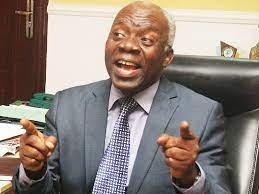
The debate over Nigeria’s alleged coup plot has taken a dramatic legal turn, following a forceful intervention by renowned human rights lawyer and Senior Advocate of Nigeria (SAN), Femi Falana. In a position that is already reshaping national discourse, Falana has insisted that military officers accused of plotting to overthrow President Bola Tinubu’s administration cannot be tried by a court-martial.
Instead, he argues, such officers must be arraigned before civilian courts, particularly the Federal High Court, in line with Nigeria’s Constitution and established democratic norms.
Falana’s position has not only reignited questions surrounding the credibility of the alleged coup plot but has also placed the military’s internal judicial process under intense public scrutiny.
Alleged Coup Plot: From Denial to Arrests
For several months, speculation about an alleged coup plot quietly circulated within political and security circles in Abuja. Initially, the Defence Headquarters (DHQ) dismissed reports suggesting any attempt to destabilise the Tinubu-led government.
However, that position later changed.
In a dramatic reversal, military authorities confirmed that several officers had been arrested in October 2025. While official figures put the number at 16 officers, other credible reports claim that as many as 42 individuals may be involved.
According to the DHQ, those arrested were accused of “acts of indiscipline” and “breaches of service regulations.” Plans were subsequently announced to try the officers through military judicial panels, commonly known as court-martials.
That announcement set the stage for Falana’s intervention.
Why Falana Rejects Court-Martial for Coup Allegations
Speaking during an interview on Channels Television, Falana challenged the legal foundation of the proposed military trials. He argued that the armed forces are stretching their constitutional authority beyond acceptable limits.
According to him, a coup attempt is not a routine military offense.
Treason Is a Crime Against the State
Falana stressed that plotting to overthrow an elected government amounts to treason or treasonable felony, both of which are clearly defined under Nigerian criminal law.
“These are not service offences like insubordination or absence without leave,” he argued. “They are grave crimes against the Nigerian State.”
As such, they fall squarely under the jurisdiction of civilian courts, not military panels.
Jurisdiction and the Constitution
Falana further explained that under Nigeria’s democratic Constitution, offences such as treason can only be tried by Federal or State High Courts.
While court-martials are legally empowered to try breaches of military discipline, he noted that they lack jurisdiction over crimes that threaten constitutional order and democratic governance.
“If you are talking of a coup or an attempt to overthrow an elected government, you either charge them with treason or treasonable felony,” Falana said. “And that can only be tried before a Federal or State High Court.”
Detention Without Access Raises Rights Concerns
Beyond jurisdiction, Falana also raised serious concerns about the treatment of the detained officers.
According to him, the suspects have allegedly been held for over three months without meaningful access to:
Legal representation
Family members
Medical car
He described this as a blatant violation of fundamental human rights, warning that prolonged incommunicado detention undermines both the rule of law and Nigeria’s international human rights obligations.
Why the Controversy Is Gaining Momentum
The legal argument has rapidly evolved into a broader political and democratic debate.
Questions Over Transparency
One of the most contentious issues is the military’s initial denial of any coup plot. Falana has openly demanded a public apology, accusing the authorities of misleading Nigerians.
For many observers, the sudden shift from denial to mass arrests has raised concerns about transparency and accountability.
Secret Military Trials vs Open Civilian Courts
Court-martials are typically conducted behind closed doors. Civilian trials, on the other hand, are public proceedings, allowing Nigerians to scrutinise evidence, witness testimonies, and judicial reasoning.
Critics argue that trying alleged coup plotters in secret fuels suspicion and revives painful memories of military-era authoritarianism.
Democracy and Civil-Military Relations
Falana warned that allowing the military to handle politically sensitive crimes internally could erode public trust in democratic institutions.
He reminded Nigerians that in a constitutional democracy, the armed forces are subject to civilian authority and the Constitution, not above it.
According to him, failing to respect this boundary risks setting a dangerous precedent.
What This Means for Nigeria
As public debate intensifies, the government faces mounting pressure to clarify:
Whether the suspects will be charged with treason
Which court has final jurisdiction
How due process will be guaranteed
Legal experts say the outcome could shape civil-military relations for years to come.
For now, Falana’s intervention has ensured that the alleged coup plot is no longer just a security matter—it is a test of Nigeria’s commitment to constitutional democracy.
Public Reaction and Ongoing Debate
Nigerians remain divided. Some believe the military should discipline its own officers swiftly. Others agree with Falana that only an open civilian trial can safeguard justice and national credibility.
As the situation unfolds, one thing is clear: the call for transparency and constitutional compliance is growing louder.
#FalanaChallengesMilitary #CoupPlotNigeria #CivilianTrial #RuleOfLaw #TinubuAdministration #NoSecretTrials
