

By DAYO ADESULU
Courtroom standoff sparks legal outrage in Nigeria
Tension erupted at the Federal High Court after Justice reportedly ordered a lawyer representing activist to kneel in court — a directive the counsel firmly rejected, describing it as “unknown to law.”
The dramatic exchange has since ignited widespread debate across Nigeria’s legal and civic spaces, raising urgent questions about courtroom conduct, judicial authority, and the limits of disciplinary action within the justice system.
Sowore’s lawyer challenges judge’s authority
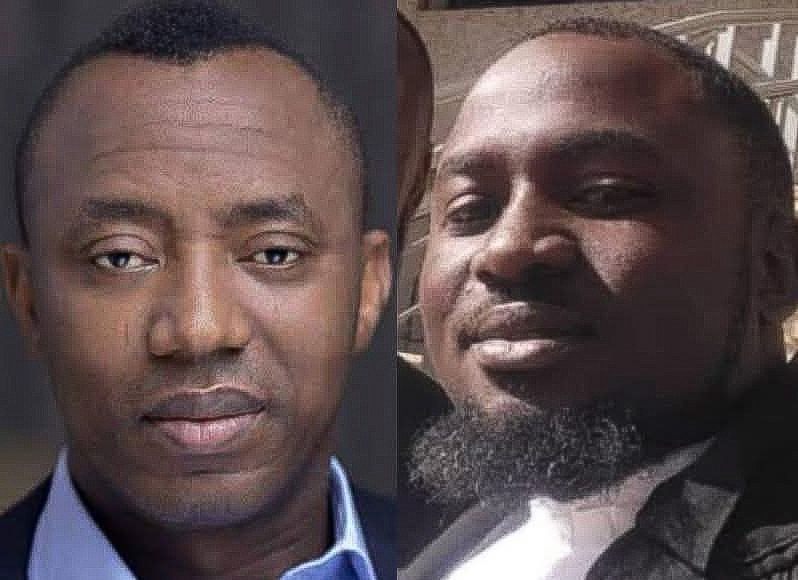
According to details presented in court, the incident unfolded during ongoing proceedings involving Sowore, a prominent activist and former presidential candidate known for his outspoken criticism of government institutions.
During the session, Justice Umar allegedly issued the controversial order following what appeared to be a disagreement or perceived misconduct by Sowore’s lawyer. However, rather than comply, the counsel stood his ground.
He argued that kneeling as punishment has no basis in Nigerian law or courtroom procedure, insisting that any disciplinary measure must align strictly with established legal frameworks.
The lawyer’s refusal immediately heightened tensions in the courtroom, drawing reactions from observers and legal practitioners present.
Legal community questions courtroom conduct
The Federal High Court kneeling order controversy has triggered swift reactions from members of the legal community, many of whom view the directive as deeply troubling.
Senior lawyers and constitutional experts have pointed out that while judges possess authority to maintain order in court, such powers are not absolute. They emphasize that disciplinary actions must remain within the bounds of the law and respect the dignity of legal practitioners.
Several lawyers have warned that introducing unconventional punishments could undermine confidence in the judiciary and blur the lines between authority and overreach.
Human rights advocates raise alarm
Beyond the legal circle, human rights groups have also weighed in on the unfolding situation. Activists argue that compelling a lawyer to kneel in court could be interpreted as degrading treatment, potentially violating fundamental human rights protections.
Given Sowore’s history of activism and confrontations with state institutions, the incident has further amplified concerns about perceived hostility toward dissenting voices.
Observers say the development could deepen existing tensions between civil society actors and the judiciary.
Federal High Court yet to issue official clarification
As public attention intensifies, the Federal High Court has not released an official statement clarifying the circumstances surrounding the incident.
This silence has fueled speculation, with many Nigerians calling for transparency and accountability. Legal analysts believe a formal response will be crucial in addressing growing concerns and preserving the credibility of the judiciary.
Broader implications for Nigeria’s justice system
The Federal High Court kneeling order controversy is quickly evolving into a broader conversation about judicial ethics and courtroom decorum in Nigeria.
While judges are empowered to enforce discipline, experts stress that such authority must be exercised with restraint and respect for constitutional rights. Any perception of excessive or humiliating punishment, they warn, could erode public trust.
Moreover, the incident highlights the need for clearer guidelines on acceptable courtroom sanctions, especially in high-profile cases involving politically exposed individuals like Sowore.
Public reaction and national debate
Across social media platforms, Nigerians have expressed a mix of shock, disbelief, and concern. Many users question whether such an order reflects broader systemic issues within the judiciary, while others caution against drawing conclusions without full details.
The phrase “Federal High Court kneeling order” has begun trending, with users debating the legality and ethical implications of the judge’s directive.
What happens next?
As the situation unfolds, attention will remain on both Justice Umar and the Federal High Court’s leadership. Legal stakeholders are expected to push for clarity, while civil society groups may demand further investigation.
Ultimately, the outcome of this controversy could shape future interpretations of judicial authority in Nigeria — particularly in how discipline is enforced within courtrooms.
For now, the incident stands as a powerful reminder that the rule of law must not only be upheld but must also be seen to uphold dignity, fairness, and justice at every level.
#Sowore #FederalHighCourt #Judiciary #RuleOfLaw #NigeriaNews #LegalDrama #HumanRights #TCNews
