

By DAYO ADESULU
Call for Deeper Collaboration Gains Momentum
The conversation around infrastructure financing in Nigeria is taking a sharper turn, as capital market leaders intensify calls for stronger partnerships between government institutions and financial market operators. At the centre of this push is Association of Securities Dealing Houses of Nigeria (ASHON), which believes Nigeria can unlock massive development funding by fully leveraging its capital market.
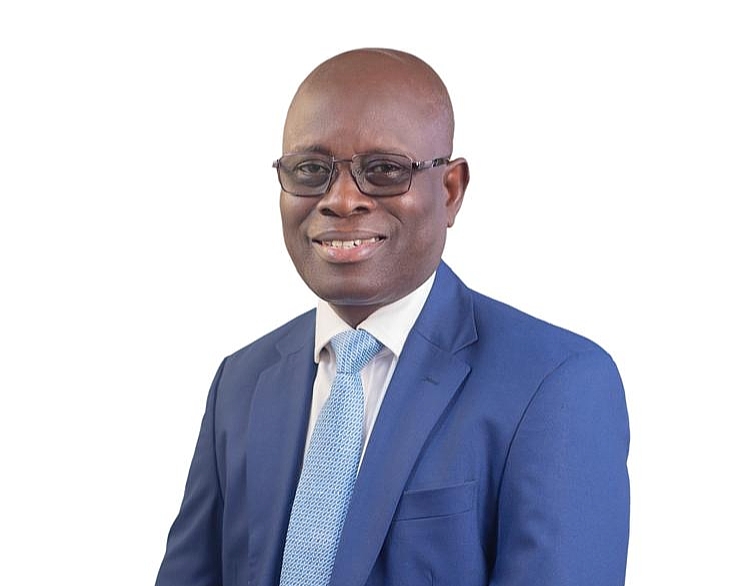
Speaking at a high-profile industry event, ASHON Chairman, Mr Sehinde Adenagbe stressed that Nigeria must move beyond fragmented efforts and embrace coordinated engagement between regulators, subnational governments, and private investors. According to him, such synergy remains critical to scaling infrastructure financing in Nigeria.
The event, which also marked the induction of Babajide Olusola Sanwo-Olu into the Chartered Institute of Stockbrokers (CIS), provided a platform to spotlight Lagos State’s growing influence in capital market-driven development.
Infrastructure Financing in Nigeria: Why Capital Markets Matter
Infrastructure financing in Nigeria has long faced structural challenges, including limited fiscal space, rising debt pressures, and inconsistent funding streams. However, Adenagbe argued that the capital market offers a sustainable alternative that remains underutilised.
He pointed out that instruments such as bonds, particularly green and infrastructure bonds, can mobilise long-term funds needed for roads, housing, energy, and urban development. More importantly, these instruments distribute risk across investors while ensuring transparency and accountability.
Adenagbe explained that when governments actively engage with market stakeholders, investor confidence improves. Consequently, more institutional and retail investors are willing to commit funds to large-scale projects.
Lagos Sets the Pace with Successful Bond Issuances
To reinforce his argument, the ASHON chairman highlighted Lagos State’s recent financial achievements. The state successfully issued a N14.815 billion Series 3 Green Bond and a N230 billion Series 4 Bond in 2025. Both offerings attracted strong investor demand and were oversubscribed, signaling robust confidence in Lagos as an investment destination.
These successes, he noted, demonstrate how infrastructure financing in Nigeria can thrive when governments adopt disciplined financial strategies and maintain transparency in fund utilisation.
Lagos has consistently positioned itself as a leader in innovative financing. By tapping into the capital market, the state has been able to fund key infrastructure projects without over-reliance on federal allocations or short-term borrowing.
Regulation, Transparency Key to Sustained Growth
While advocating broader adoption of capital market instruments, Adenagbe emphasised that credibility remains the backbone of sustainable infrastructure financing in Nigeria. He urged governments at all levels to prioritise transparency, fiscal discipline, and accountability when raising funds.
According to him, investors are more likely to commit resources when they trust that projects will be executed efficiently and funds will not be mismanaged. Therefore, regulatory compliance and strong oversight mechanisms must remain non-negotiable.
He also called for deeper collaboration among key institutions, including the Security and Exchange Commission Nigeria and NGX Group Plc. Strengthening these relationships, he said, would enhance market integrity and expand participation across different investor categories.
Sanwo-Olu’s Recognition Signals Policy Confidence
The induction of Governor Sanwo-Olu as an Associate of CIS carries symbolic and strategic significance. Market watchers see the recognition as a nod to Lagos State’s investor-friendly policies and its consistent use of capital market instruments to drive development.
Adenagbe expressed optimism that the governor’s new status would further deepen engagement between policymakers and market operators. He noted that such collaboration is essential for scaling infrastructure financing in Nigeria beyond Lagos to other states.
A Broader Path for Economic Growth
As Nigeria grapples with infrastructure deficits estimated in trillions of naira, experts believe that capital market-driven solutions could redefine the country’s development trajectory. However, success will depend on how effectively governments align with market principles.
The ASHON chairman’s message is clear: infrastructure financing in Nigeria cannot rely solely on traditional funding models. Instead, it requires a deliberate shift toward innovative financial instruments backed by strong governance frameworks.
With Lagos already setting the pace, attention is now turning to other states and federal agencies. Will they embrace this model and unlock new funding streams, or continue to depend on constrained public revenues?
For investors and policymakers alike, the coming years may determine whether Nigeria can finally bridge its infrastructure gap through strategic collaboration.
The Road Ahead
Ultimately, infrastructure financing in Nigeria sits at a crossroads. On one hand lies the opportunity to harness capital markets for sustainable growth. On the other, the risk of missed opportunities due to weak coordination and policy inconsistency.
As stakeholders continue to push for reforms, one thing remains certain: without stronger collaboration between government and market operators, Nigeria’s infrastructure ambitions may remain out of reach.
#InfrastructureFinancing #NigeriaEconomy #CapitalMarket #LagosState #SanwoOlu #ASHON #EconomicGrowth #PublicPrivatePartnership
