

By DAYO ADESULU
For nine days, former presidential candidate and human rights activist, Omoyele Sowore, lived behind the walls of Kuje Correctional Centre—not as a visitor or advocate, but as an inmate sharing overcrowded cells with more than a thousand others.
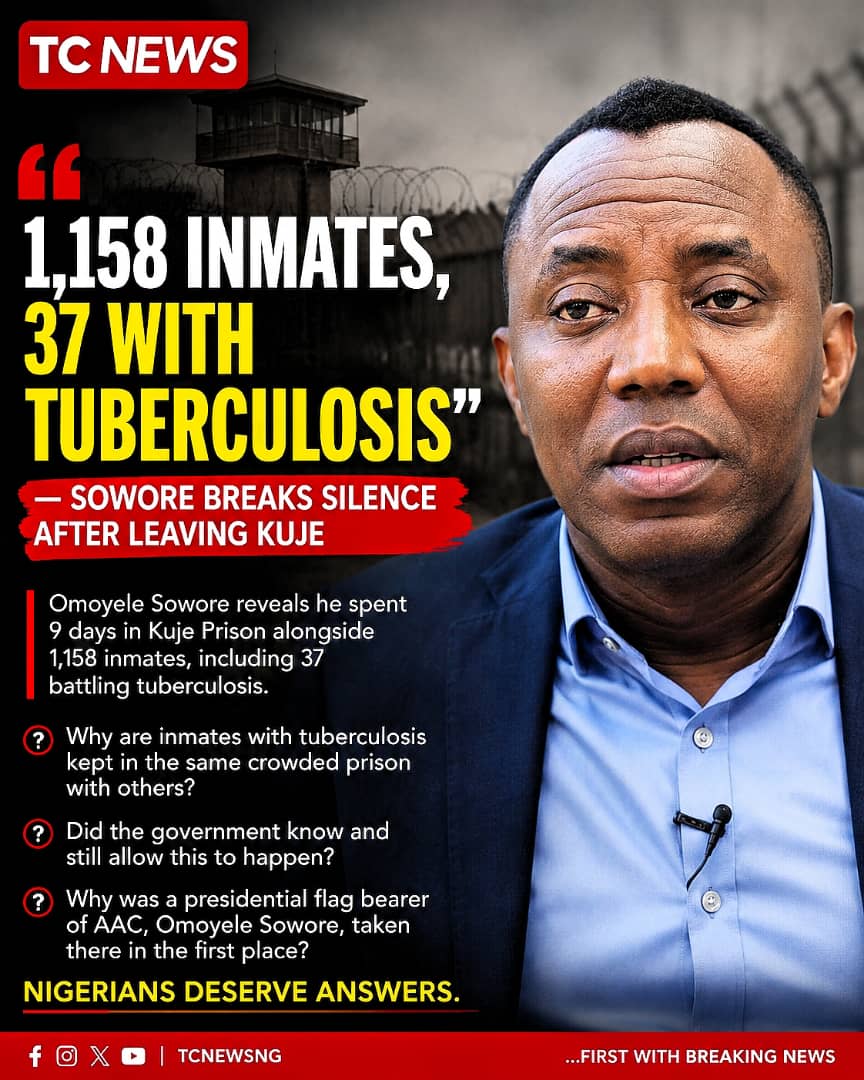
Upon regaining his freedom, Sowore painted a troubling picture of life inside one of Nigeria’s most prominent correctional facilities, revealing that the prison housed 1,158 inmates, including 37 reportedly suffering from tuberculosis (TB).
His disclosure has reignited concerns over the conditions in Nigerian prisons, particularly the dangers of housing inmates battling contagious diseases alongside hundreds of others in congested facilities.
“I’m just coming back from Kuje prison where I’ve been incarcerated for nine days with another 1,158 other inmates and 37 of them suffering from tuberculosis. I’m just heading back to the federal capital of thieves, Abuja now,” Sowore wrote after his release.
The revelation has sparked fresh debate over inmate welfare and public health. Medical experts have long warned that tuberculosis spreads more easily in overcrowded and poorly ventilated environments, making correctional centres especially vulnerable if infected inmates are not properly diagnosed, isolated, and treated.
Sowore’s account has also raised broader humanitarian questions. If authorities were aware that dozens of inmates were battling tuberculosis, why were they reportedly kept in the same overcrowded environment with other prisoners? What measures were taken to protect inmates, prison officials, lawyers, visitors, and others who entered the facility?
Beyond the health concerns, many Nigerians are also asking whether it was appropriate for a former presidential flag bearer of the African Action Congress (AAC) to be remanded in such conditions while awaiting the outcome of his legal process. The debate has focused not on whether anyone should be above the law, but on whether every Nigerian—regardless of status—deserves detention conditions that meet basic standards of health, dignity, and human rights.
Human rights advocates argue that the issues raised by Sowore’s experience extend far beyond one individual. They say his brief incarceration has once again exposed longstanding concerns about overcrowding, inadequate healthcare, and prison reforms that have remained unresolved for years.
As conversations continue across the country, many believe the spotlight should now shift from one man’s detention to the thousands of inmates who remain inside correctional facilities every day, many of whom face overcrowding, disease, and limited access to adequate medical care.
For critics, Sowore may have walked out of Kuje Prison after nine days, but his account has left behind uncomfortable questions that the government and correctional authorities may now be expected to answer.
