

By DAYO ADESULU
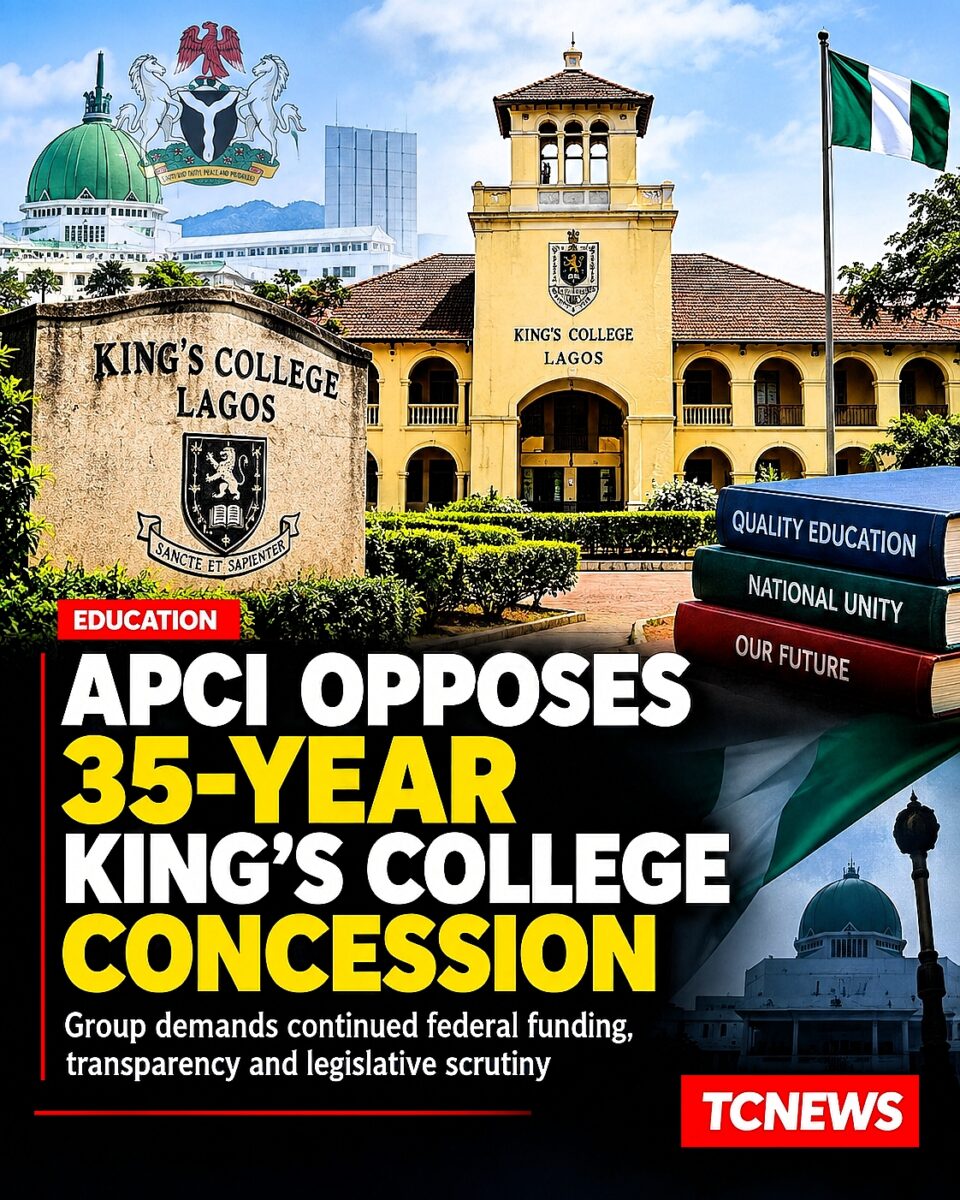
The African Principals Conference Initiative (APCI) has raised strong objections to the proposed 35-year concession of King’s College, Lagos, expressing concern over plans by the Federal Government to stop budgetary allocations to the institution under the arrangement.
In a press statement issued on September 9, 2026, APCI described the development as a matter of “profound concern and dismay,” arguing that King’s College is a historic public institution that should continue to receive government funding.
The organisation particularly questioned the proposed withdrawal of budgetary provisions for the school, warning that such a move could undermine the institution’s stability and accessibility.
APCI: King’s College Is a National Public Trust
According to APCI, King’s College was established on September 9, 1909, and has played a significant role in the development of Nigeria’s federal education system.
The organisation described the institution as a foundational pillar of the Federal Unity College system, noting that public educational institutions such as King’s College have historically operated through government oversight, policy direction and annual budgetary appropriations.
APCI said the Federal Unity Colleges were conceived as instruments for promoting national unity, bridging regional divisions and expanding access to quality education for children from different backgrounds.
It therefore argued that the schools should be treated as “national public trusts” rather than commercial assets that could be transferred from public management through long-term concession arrangements.
APCI Raises Four Major Concerns
The principals’ initiative identified four major areas of concern surrounding the proposed King’s College concession.
Withdrawal of Government Responsibility
APCI argued that ending budgetary allocations to a public institution as part of a 35-year concession would amount to the Federal Government abandoning its responsibility to fund public education.
The organisation maintained that education remains a fundamental public good and expressed opposition to transferring the responsibility for managing public schools entirely to private or alumni-led structures.
Transparency and Public Disclosure
The group also questioned the level of information available to the public concerning the proposed arrangement.
According to APCI, important details about the terms of the concession, its operational structure and accountability mechanisms have not been sufficiently disclosed to stakeholders and professional educators.
It called for the full details of the proposed agreement to be made public to allow informed scrutiny.
Fear of Commercialisation
Another concern raised by APCI is the possibility that the concession could increase the cost of education.
The organisation warned that moving public secondary education infrastructure into private concession arrangements could contribute to the commercialisation of education and weaken the affordability and accessibility principles associated with the Federal Unity Colleges.
Demand for Legislative Oversight
APCI further argued that a structural change of such magnitude should receive appropriate legislative scrutiny.
It maintained that public educational institutions derive their funding and legitimacy from legislative appropriations and that the National Assembly should not be bypassed in decisions involving significant changes to the management and funding of public schools.
APCI Backs Alumni Support But Defends Professional Educators
While opposing the proposed concession, APCI said it appreciates philanthropic contributions, infrastructure support, endowments and mentorship initiatives from alumni associations.
However, the organisation cautioned against replacing professional educational management with alumni-led administration.
It argued that alumni networks consist of professionals from different fields and may not necessarily possess the specialised expertise required for core educational administration and pedagogical governance.
APCI also cited what it described as historical precedents in which removing administrative autonomy from professional educators created friction and affected academic standards.
Group Demands Immediate Halt to Concession Process
APCI said it aligns with other concerned voices and education stakeholders calling for an immediate halt to what it described as an opaque process.
The organisation called on the Federal Government to publicly release the detailed terms, agreements and operational framework surrounding the proposed King’s College concession.
It also urged the government to reconsider plans to stop budgetary provisions for the institution, arguing that continued public funding is necessary to maintain institutional stability and accessibility.
In addition, APCI demanded wider consultations involving professional education bodies, teachers’ associations and other key stakeholders before any irreversible changes are made to the structure of the Federal Unity Colleges.
Why This Matters
The debate over the King’s College concession touches on a wider question about how Nigeria should finance and manage historic public schools.
While concession arrangements can potentially attract private investment, improve infrastructure and introduce additional resources, concerns about affordability, accountability, professional administration and continued government responsibility remain important.
For APCI, the central issue is that private or alumni support should complement, rather than replace, the government’s responsibility for public education.
The organisation warned that failure to properly scrutinise the proposed arrangement could have long-term consequences for Nigeria’s public education system.
Conclusion
The African Principals Conference Initiative has firmly opposed the proposed 35-year concession of King’s College, Lagos, particularly the reported plan to withdraw government budgetary provisions for the institution.
APCI is demanding greater transparency, continued public funding, legislative scrutiny and broad stakeholder consultation before the Federal Government proceeds with the arrangement.
The organisation’s position adds to the growing debate over the future management of Nigeria’s historic public educational institutions and the balance between government funding, private participation and professional educational administration.
Signed: Ayodele Joseph, Director-General, African Principals Conference Initiative.
Drop your view below. 👇
#King’sCollege #King’sCollegeLagos #APCI #EducationNigeria #FederalGovernment #PublicEducation #TCNEWS #NigeriaNews
