

By DAYO ADESULU
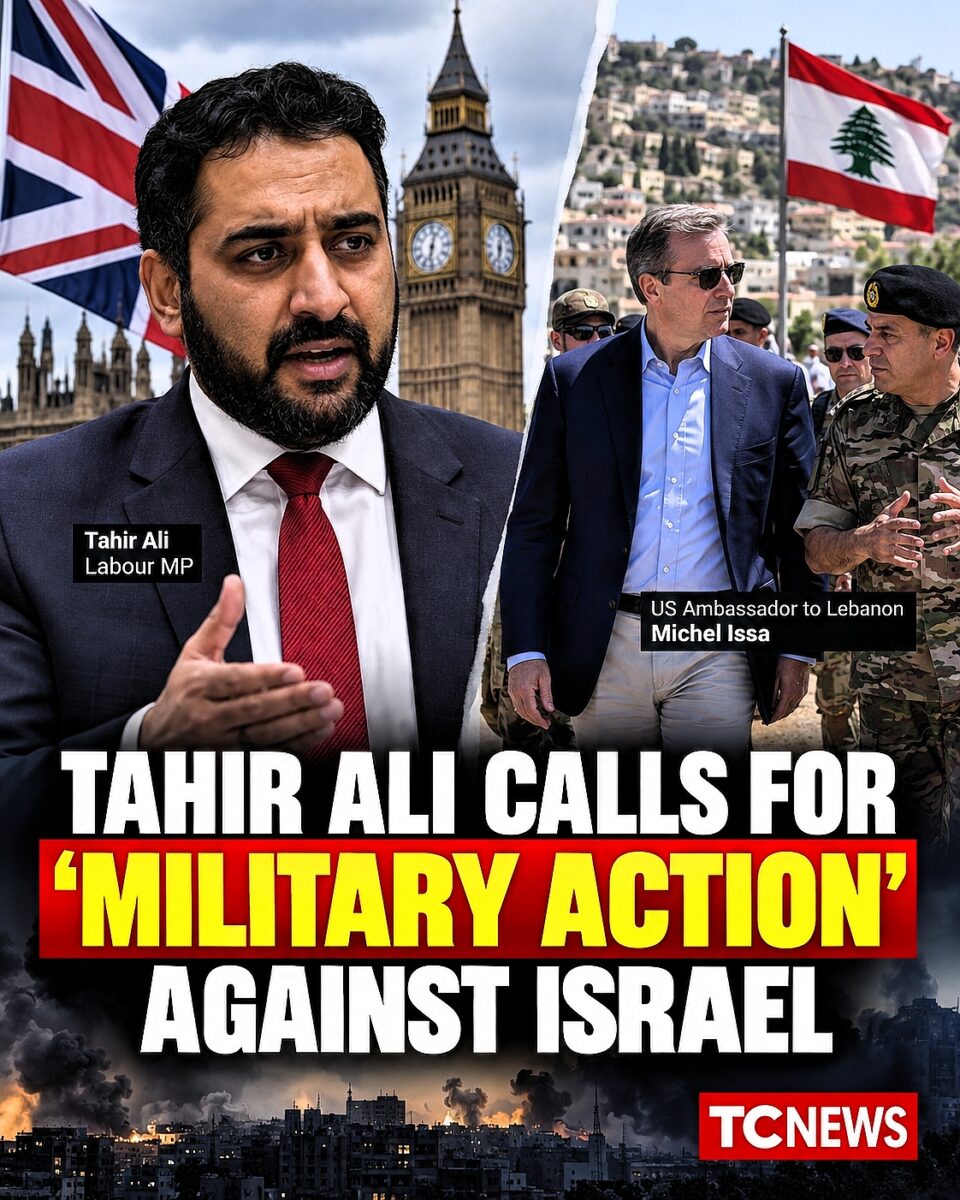
British Labour MP Tahir Ali has called for “military action” against Israel and challenged demands for the disarmament of Hamas, according to a report by The Jewish Chronicle. His remarks came as a separate US-backed framework between Israel and Lebanon continues to focus on the disarmament of Hezbollah and the expansion of Lebanese army control in southern Lebanon.
Tahir Ali Challenges Calls to Disarm Hamas
During a parliamentary debate on the Israeli-Palestinian conflict, Ali intervened after another MP, Richard Ford, argued that disarming Hamas and dismantling the organisation should form part of a long-term solution.
According to The Jewish Chronicle, Ali questioned why similar demands were not being made regarding Israel.
“Why don’t we also call for Israel to be disarmed?”
The report also attributed to Ali a call for “military action” against Israel.
Ali’s intervention places the issue of disarmament within the wider political debate over how armed groups and states involved in the Middle East conflict should be treated.
His comments, as reported, are political statements made during a parliamentary debate and do not by themselves represent the official position of the British government or the Labour Party as a whole.
US Envoy Visits Southern Lebanon
Meanwhile, the US ambassador to Lebanon, Michel Issa, has visited a village in southern Lebanon that recently came under the control of the Lebanese Armed Forces.
Issa travelled to Zawtar al-Gharbiya, where the Lebanese army has assumed control as part of a US-backed framework involving Israel and Lebanon.
The US Embassy said the ambassador visited southern Lebanon to assess conditions on the ground and examine the progress and challenges facing communities in designated “pilot zones.”
The visit comes against the backdrop of a framework agreed by Israel and Lebanon in June with US support.
Under the arrangement, Lebanese forces are expected to assume exclusive control of designated areas while Israel gradually withdraws from corresponding areas of southern Lebanon. The process is linked to the removal and disarmament of non-state armed groups, principally Hezbollah.
Israel Withdrawal Linked to Hezbollah Disarmament
The June framework established pilot zones where the Lebanese army would take control and non-state armed groups would be excluded.
The agreement is intended to provide a pathway toward a broader Israeli withdrawal from southern Lebanon while strengthening the authority of the Lebanese state.
However, implementation has faced significant challenges.
Hezbollah has rejected the framework, while Israeli officials have maintained that security arrangements depend on addressing the threat posed by the Iran-backed group.
Recent developments have also underscored the fragile nature of the arrangement. Reuters reported this week that US-brokered negotiations have produced a framework for Israeli troop withdrawal, but implementation remains tied to Hezbollah’s disarmament and the deployment of Lebanese forces.
Wider Middle East Disarmament Debate
The contrasting issues surrounding Hamas and Hezbollah highlight one of the central disputes in the wider Middle East conflict: who should disarm, under what conditions, and what security guarantees should accompany such moves?
For supporters of Hamas disarmament, removing the group’s military capabilities is viewed as essential to any long-term security arrangement involving Israel and the Palestinians.
Critics, including Ali in the parliamentary exchange reported by The Jewish Chronicle, question why Israel’s military capabilities should not also be part of discussions about disarmament.
Meanwhile, the Israel-Lebanon framework takes a different approach. Rather than calling for the disarmament of a state, it seeks to transfer security responsibilities in southern Lebanon to the Lebanese government and military while requiring Hezbollah to give up its independent armed presence.
Why This Matters
The developments involving Tahir Ali, Hamas, Israel, Hezbollah and southern Lebanon reflect the broader international argument over how the region can move from continuing military confrontation toward political and security arrangements.
For Britain, comments by individual MPs contribute to an increasingly intense parliamentary debate over the country’s approach to Israel and the Palestinian conflict.
For Lebanon, the success or failure of the US-backed framework could determine whether the Lebanese army expands its authority in the south and whether Israel proceeds with further withdrawals.
At the same time, the continued disagreement over Hamas and Hezbollah disarmament demonstrates how difficult it remains to establish a common standard for security, sovereignty and military power across the region.
Key Facts
- Tahir Ali: British Labour MP who, according to The Jewish Chronicle, called for “military action” against Israel.
- Hamas: Ali questioned why calls for its disarmament should not also apply to Israel.
- Michel Issa: US ambassador to Lebanon who visited southern Lebanon.
- Zawtar al-Gharbiya: Village recently placed under Lebanese army control.
- Lebanon-Israel framework: US-backed arrangement linking Israeli withdrawal from designated areas with Lebanese army deployment and Hezbollah disarmament.
- Hezbollah: Iran-backed armed group whose disarmament remains a major condition in the framework.
Conclusion
The remarks attributed to Labour MP Tahir Ali have added another dimension to Britain’s parliamentary debate over Israel and the Palestinian conflict. His questioning of calls to disarm Hamas comes as a separate US-backed diplomatic effort in Lebanon attempts to establish greater Lebanese state control over the country’s south.
The two developments point to the same unresolved question at the heart of the region’s security debate: how should military power be addressed while guaranteeing security and sovereignty for all sides?
The answer remains contested among governments, political leaders and lawmakers, while diplomatic efforts continue.
What do you make of the MP’s remarks and the wider disarmament debate?
#TahirAli #Israel #Hamas #Hezbollah #Lebanon #UKPolitics #MiddleEast #TCNEWS
