

By DAYO ADESULU
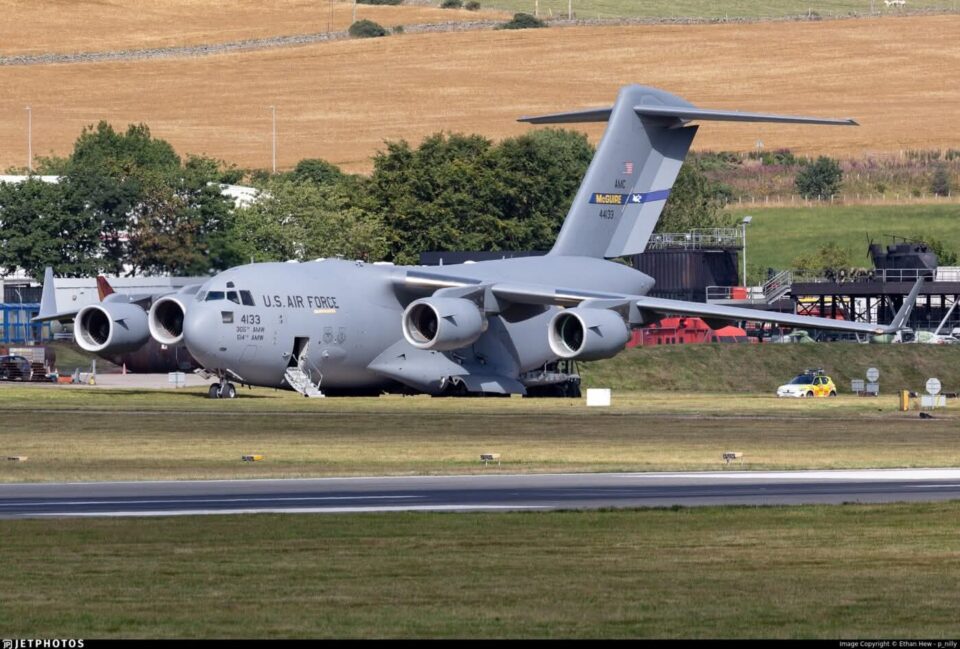
The first batch of US troops arrive in Nigeria, marking a significant escalation in international efforts to combat insurgency in the North-East. Five United States military aircraft have now touched down in the region ahead of a coordinated offensive against the Islamic State West Africa Province (ISWAP).
Security sources confirmed that the deployment began late Thursday night when a US military aircraft landed at the Maiduguri International Airport in Maiduguri, the capital of Borno State. By Friday evening, at least three aircraft were stationed at the military base, with visible activity as personnel and equipment were offloaded.
The arrival signals renewed military cooperation between Nigeria and the United States, particularly in intelligence sharing, surveillance, and targeted counterterrorism operations.
Strategic Deployment in Maiduguri
Maiduguri remains the epicentre of Nigeria’s counterinsurgency campaign. As a frontline city in the fight against ISWAP and remnants of Boko Haram, the Borno State capital houses key military installations and serves as the operational hub for regional offensives.
Reports indicate that logistics teams began unloading advanced equipment from at least one of the aircraft shortly after arrival. Military sources suggest that the incoming US troops will support Nigerian forces with surveillance technology, air support coordination, and specialized counterterrorism expertise.
Although authorities have not publicly disclosed the exact number of US personnel deployed, analysts believe the presence of five aircraft suggests a substantial operational footprint.
Importantly, this development comes amid renewed ISWAP attacks targeting military formations and civilian communities across Borno and parts of Yobe State.
Renewed Push Against ISWAP
ISWAP, an offshoot of Boko Haram, has intensified its operations in recent months. The group has carried out ambushes on military convoys, planted improvised explosive devices (IEDs), and launched coordinated assaults on remote communities.
Security experts argue that the decision to have US troops arrive in Nigeria at this time reflects growing concerns over the group’s resilience and its ability to regroup despite sustained pressure from Nigerian forces.
Furthermore, ISWAP has demonstrated improved tactical coordination and access to sophisticated weaponry, raising alarm within regional security circles.
A joint offensive backed by US intelligence and air capabilities could significantly weaken the group’s operational command structure. Observers say the collaboration may also focus on disrupting supply routes and intercepting communication networks used by insurgents.
Strengthening Nigeria–US Military Ties
Military cooperation between Nigeria and the United States has evolved over the years, particularly in the areas of training, equipment support, and intelligence gathering.
Previously, the US has provided Nigeria with A-29 Super Tucano aircraft, surveillance drones, and counterterrorism training programs. However, the current deployment marks one of the most visible on-ground presences in recent years.
While neither the Nigerian Defence Headquarters nor the US Department of Defense has issued a detailed public statement regarding the scope of the operation, diplomatic sources indicate that the deployment falls under an expanded counterterrorism partnership framework.
Notably, the move comes at a time when regional governments across West Africa are grappling with escalating extremist violence.
What This Means for the North-East
For residents of Borno and surrounding states, the news that US troops arrive in Nigeria offers cautious optimism. Years of insurgency have displaced millions, destroyed infrastructure, and crippled economic activities.
However, security analysts caution that military operations alone may not end the insurgency. Sustainable peace, they argue, requires a multi-pronged approach that combines military action with humanitarian support, economic rebuilding, and deradicalization initiatives.
Still, the immediate priority remains neutralizing ISWAP’s operational capabilities. The joint offensive is expected to focus on forested enclaves and border corridors where militants have historically established camps.
Regional and International Implications
The deployment also underscores the international dimension of the insurgency threat in the Lake Chad Basin. ISWAP maintains cross-border networks spanning Nigeria, Niger, Chad, and Cameroon.
By reinforcing Nigeria’s military campaign, the United States signals its continued interest in preventing extremist expansion in West Africa. Analysts say successful operations could disrupt transnational terrorist financing and recruitment pipelines.
At the same time, observers will watch closely to see how the joint offensive unfolds and whether it delivers measurable gains in territory recovery and civilian protection.
A Turning Point?
As US troops arrive in Nigeria and military aircraft remain stationed in Maiduguri, attention now shifts to the operational phase of the campaign.
Security officials maintain that the collaboration aims to accelerate the defeat of ISWAP and restore stability to the North-East. While challenges remain, the presence of American forces adds a new layer of strategic capability to Nigeria’s counterterrorism efforts.
For now, the skies over Maiduguri reflect heightened military activity — and perhaps, a renewed determination to bring lasting security to a region long scarred by insurgency.
#USTroopsInNigeria #NigeriaSecurity #ISWAP #Counterterrorism #BornoState #Maiduguri #LakeChadBasin
