

By DAYO ADESULU
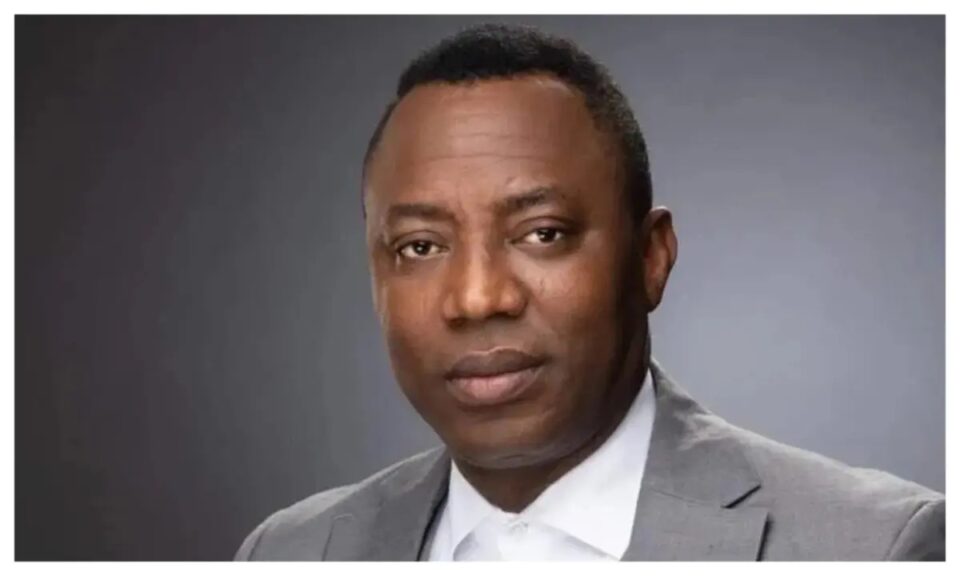
Concerns over Nigeria Police tear gas use have resurfaced nationwide, reigniting a fierce debate about crowd control, public safety, and accountability within the Nigeria Police Force (NPF). The renewed outcry follows a strongly worded public statement by Omoyele Sowore, former presidential aspirant, publisher, and human rights campaigner, who drew from medical research, historical records, and personal encounters to challenge the long-held claim that tear gas is a “non-lethal” tool.
Sowore’s intervention has struck a nerve. For many Nigerians, it echoes lived realities from decades of protests, from the June 12 struggle to the #EndSARS movement, and raises urgent questions about how security agencies manage civic dissent in a democracy.
Nigeria Police Tear Gas Use Under Renewed Scrutiny
At the centre of the controversy is the routine deployment of tear gas and kinetic impact projectiles during protests and civil unrest. While police authorities often describe these weapons as “less-lethal,” Sowore argues that such language downplays their dangers and masks systemic abuse.
According to him, the issue is not just about crowd dispersal. It is about how force is applied, who bears the consequences, and whether there is meaningful oversight. He insists that weak accountability structures and limited transparency have allowed misuse to persist.
Medical Evidence Raises Red Flags
Medical and public-health research has long warned about the dangers associated with tear gas agents, particularly CS (ortho-chlorobenzylidene malononitrile) and CN (chloroacetophenone). Studies link exposure to eye damage, severe skin irritation, and acute respiratory complications.
Experts note that risks increase sharply in enclosed spaces or when large quantities are deployed. Vulnerable groups—including children, pregnant women, older persons, and people with asthma or heart conditions—face heightened danger.
Beyond chemical agents, kinetic impact projectiles fired alongside tear gas canisters pose even more serious threats. International human rights investigations have documented cases where improper use led to permanent disabilities, loss of eyesight, and deaths, particularly when projectiles were fired directly at individuals or aimed at sensitive parts of the body.
Critics argue that these findings demand strict operational limits, clear engagement rules, and public disclosure of deployment guidelines—safeguards they say remain inadequate in Nigeria.
Personal Accounts Bring the Debate Home
Sowore’s account goes beyond academic research. He recounts repeated exposure to heavy tear gas deployments over decades of activism, describing scenes marked by panic, injuries, and long-term harm.
One incident he highlighted involved a young Nigerian in Abuja who allegedly lost both eyes after being struck by tear gas projectiles reportedly fired by a Divisional Police Officer. The injury, described as permanent, has become emblematic for activists who argue that tear gas misuse can maim for life.
He also revisited the June 12, 1993 unrest in Ebute-Metta, Lagos, a defining moment in Nigeria’s democratic struggle. During that period, a tear gas canister allegedly entered a residential home, resulting in the death of a newborn baby. The same crackdown reportedly targeted prominent figures, including Nobel Laureate Prof. Wole Soyinka, underscoring the sweeping use of force at the time.
From June 12 to #EndSARS: A Pattern Re-Emerges
Recent events suggest that these concerns are far from historical. During #EndSARS remembrance activities at the Lekki Toll Gate, protesters again reported tear gas exposure, breathing difficulties, and injuries linked to crowd dispersal operations.
In Abuja, Sowore stated that he sustained a serious groin injury after a tear gas canister was allegedly fired at close range by a police officer identified as CSP Hyleria Altine Daniel. He said the incident required medical attention and left lasting physical and psychological effects.
Such accounts, activists argue, reinforce claims that crowd-control weapons are sometimes deployed in ways that directly endanger lives rather than simply maintain order.
Is “Non-Lethal” a Misleading Label?
A major fault line in the debate is terminology. Security agencies frequently describe tear gas and kinetic projectiles as “non-lethal” or “less-lethal.” Sowore and other rights advocates argue that this framing minimizes real dangers and shields officers from accountability.
“Tear gas can kill,” Sowore insists, pointing to documented cases where deaths resulted from blunt-force injuries, suffocation, or medical complications following exposure. While not designed to kill instantly, critics say the weapons can have fatal outcomes, especially when misused.
Human rights lawyers stress that in a democracy, outcomes matter as much as intent. When canisters are fired at close range, aimed at individuals, or used excessively in confined spaces, the risk of death or permanent injury rises sharply.
Calls for Accountability and Reform
Civil society organisations are now renewing calls for urgent reforms within the Nigeria Police Force. Their demands include clearer rules of engagement, independent investigations into alleged abuses, mandatory body cameras during crowd-control operations, and transparent reporting on tear gas procurement and usage.
Legal experts also argue that Nigeria’s constitutional democracy does not permit secretive or excessive use of force against citizens exercising their rights to protest and peaceful assembly.
A Democratic Test for Nigeria
As protests and civic actions continue across the country, the debate over Nigeria Police tear gas use shows no sign of fading. For many Nigerians, it is no longer an abstract policy discussion. It is deeply personal, shaped by memories, injuries, and unresolved trauma.
Ultimately, how Nigeria regulates and monitors crowd control may serve as a litmus test for its commitment to human rights and the rule of law. Without transparency and accountability, critics warn, distrust between citizens and law enforcement will only deepen.
For victims and witnesses, the message remains stark: weapons described as “less-lethal” are not harmless, and ignoring that reality carries a heavy human cost.
Credit: Omoyele Sowore, former presidential aspirant and human rights fighter.
#NigeriaPolice #TearGas #PoliceBrutality #CrowdControl #HumanRights #EndSARS #June12 #PublicSafety #RuleOfLaw
