

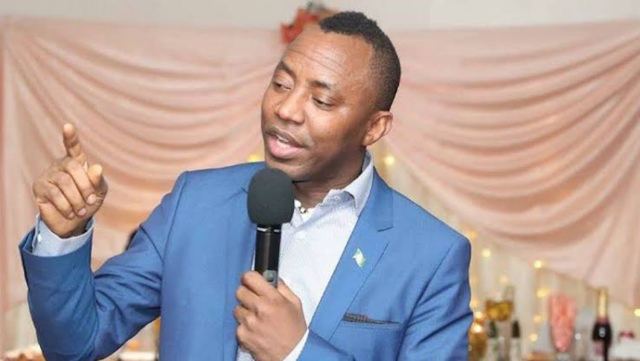
By DAYO ADESULU
In the early 1980s, at Community High School (CHS), Kiribo, in Ondo State, my journey into faith began in a familiar Nigerian setting: the Scripture Union. Like many secondary school students of that era, I found structure, discipline, and a sense of purpose within its weekly meetings. Our Scripture Union leader was a corps member, Mr. Anozie—a strict disciplinarian whose presence left a lasting impression on us. He was firm, unyielding, and deeply committed to moral uprightness. Decades later, his influence still lingers in memory. If anyone knows his whereabouts today, I would genuinely like to reconnect.
That early grounding in faith was not casual. It shaped habits of reflection, conscience, and responsibility. And it planted questions—quiet ones at first—about right and wrong, obedience and conviction.
Faith Beyond the Classroom
When I moved on to Ofedepe Secondary School in Okitipupa, also in Ondo State, faith took on a different texture. This time, it was not the Scripture Union but the Christ Apostolic Church (CAC) that drew me in. Almost immediately, I was conscripted—perhaps the word is accurate—into the local assembly as a “prayer warrior.”
It was an intense season. Prayer meetings stretched for hours. Spiritual warfare was taken seriously. Discipline was again central. Yet, beyond the rituals, something deeper was happening. I was learning endurance. I was learning sacrifice. I was learning to believe that unseen forces could be challenged, confronted, and overcome.
Still, even then, a quiet tension grew within me. While prayer promised change, the society around me remained deeply unequal. Poverty lingered. Abuse of power was normalised. Injustice, especially against the voiceless, felt systemic rather than accidental.
University Years and a Deeper Awakening
My admission to the University of Lagos marked another turning point. As a freshman, I joined the Deeper Life Campus Fellowship, a community known for doctrinal rigour, moral strictness, and an uncompromising view of holiness. It was, in many ways, a continuation of everything I had known before—discipline, Scripture, personal piety.
However, it was also during this period that my understanding of faith began to evolve rapidly.
University life exposed contradictions. I saw brilliant students shut out by corruption. I watched power silence truth. I witnessed how state authority could crush dissent while hiding behind legality. Gradually, the questions became louder: What is faith if it does not confront injustice? What is holiness in a society built on oppression?
When Activism Became Ministry
After those formative religious experiences, my path shifted decisively. I began doing what I now regard as the real “Lord’s work”—fighting for human rights, democracy, and good governance. It was not a rejection of faith. Rather, it felt like its logical conclusion.
That journey came at a cost.
Standing against injustice in Nigeria is rarely comfortable. It often attracts intimidation. Sometimes, it leads to detention. On more than one occasion, it meant prison. Yet, each arrest, each cell, each moment of confinement clarified something important: silence, in the face of injustice, is a form of complicity.
Gradually, the language of religion gave way to the language of rights. Prayer circles were replaced with protest lines. Pulpits gave way to courtrooms and streets. But the moral foundation remained the same.
“My Religion Is Justice”
Today, when asked about my religion, my answer is simple and deliberate:
My religion is JUSTICE.
Not justice as a slogan. Not justice as selective outrage. But justice as a daily obligation—to speak truth to power, to defend the oppressed, and to insist on accountability, even when it is inconvenient or dangerous.
Justice, to me, is faith expressed in action. It is prayer translated into policy. It is righteousness stripped of hypocrisy. It is spirituality that refuses to look away.
A Photograph, A Memory, A Message
The attached photograph—taken in 1982—shows members of the Scripture Union at Community High School, Kiribo. It captures a moment of innocence, discipline, and spiritual formation. We were young. We were hopeful. We believed the world could be better.
In many ways, that belief never left me. It simply matured.
From Scripture Union meetings to prayer vigils, from campus fellowships to prison cells, the journey has been consistent in one respect: a refusal to accept injustice as normal.
Faith evolves. Conviction deepens. Methods change. But purpose, when anchored in justice, remains unshaken.
Final Thought
Religion that does not defend human dignity is incomplete. Spirituality that avoids justice is performative. And belief that refuses to confront power is empty.
That is why, today, beyond denominations and doctrines, I stand by this creed:
Justice is my religion.
#JusticeAsAReligion #HumanRights #Democracy #GoodGovernance #FaithAndActivism #NigerianVoices #SocialJustice #PersonalReflection
