

By DAYO ADESULU
The US Senate blocks Iran war powers resolution in a closely contested vote, deepening political divisions in Washington over America’s military involvement in the Middle East.
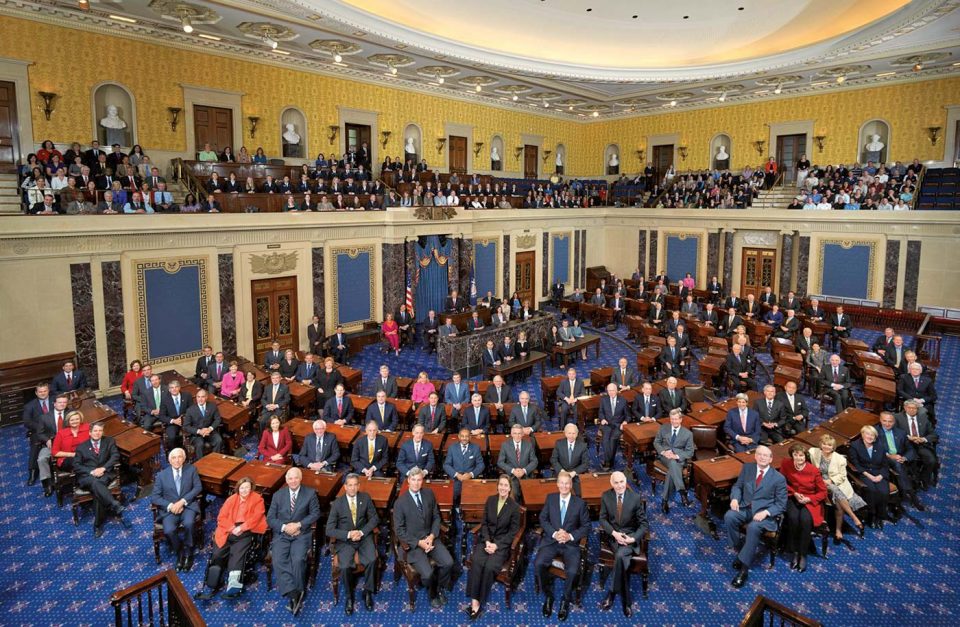
Lawmakers voted 47 to 53 against the measure, effectively halting an attempt to force the withdrawal of U.S. armed forces from what sponsors described as “unauthorized hostilities” involving the Islamic Republic of Iran.
Sharp Divide in Senate Voting Pattern
The vote largely followed party lines, reflecting ongoing tensions between Democrats and Republicans over executive war powers.
However, two senators broke ranks:
- Rand Paul, a Republican known for opposing foreign military interventions, voted in support of the resolution
- John Fetterman, a Democrat, voted against it
Their crossover votes highlighted the complexity of U.S. foreign policy debates, where ideological lines often blur.
What the Resolution Sought to Do
The failed resolution aimed to invoke the War Powers Resolution, a law designed to limit the president’s ability to engage U.S. forces in hostilities without congressional approval.
If passed, it would have required the White House to:
- Withdraw U.S. forces from certain military engagements involving Iran
- Seek explicit congressional authorization for continued operations
Supporters argued that Congress must reclaim its constitutional authority over war decisions. Critics, however, warned that such restrictions could weaken U.S. strategic positioning.
Rising Tensions Over Iran Policy
The US Senate blocks Iran war powers resolution at a time of heightened geopolitical tension, with increased military activity and growing fears of escalation in the region.
Analysts say the vote signals:
- Continued congressional reluctance to constrain presidential military authority
- Deep partisan disagreement over U.S. involvement abroad
- A broader debate about America’s role in global conflicts
Although the resolution failed, it has intensified calls among some lawmakers for greater oversight of military actions.
Political and Global Implications
While the vote does not authorize new military action, it effectively allows current operations to continue without additional congressional restrictions.
Observers believe the outcome may:
- Strengthen executive control over foreign military decisions
- Fuel debate ahead of upcoming U.S. elections
- Influence diplomatic relations with Iran and allied nations
For now, the Senate’s decision underscores one reality — Washington remains sharply divided on how far the United States should go in confronting Iran.
Bottom Line
The US Senate blocks Iran war powers resolution, but viral claims circulating online exaggerate and misstate key details about the vote.
The core truth stands:
👉 A 47–53 vote stopped efforts to limit U.S. military engagement with Iran.
