

By DAYO ADESULU
Iran Proposes Alternative Plan to Reopen Vital Global Shipping Route
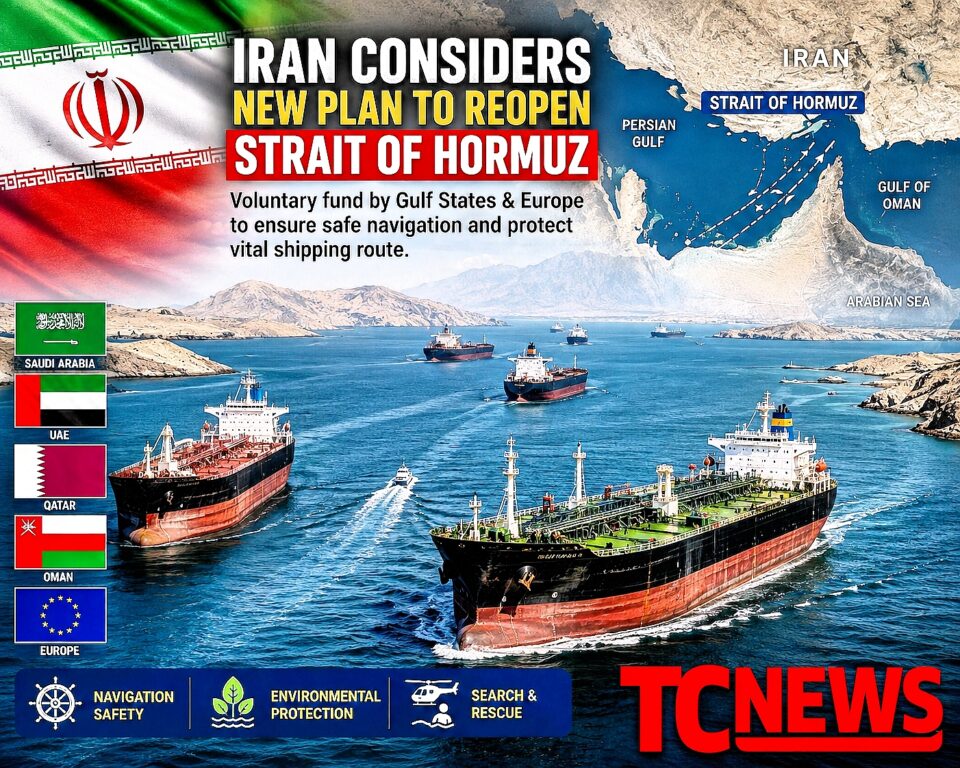
Iran is reportedly considering a new proposal to reopen the strategic Strait of Hormuz through the establishment of a voluntary international fund financed by Gulf Arab states and European countries that depend on the waterway for energy and commercial shipping.
According to The Telegraph, the proposal would replace the idea of imposing direct transit charges on vessels with a cooperative funding mechanism designed to finance essential maritime services. These services would include navigation safety, environmental protection, and search-and-rescue operations in one of the world’s busiest and most strategically important maritime corridors.
The development comes amid continued international attention on the Strait of Hormuz, a narrow waterway through which a significant share of the world’s oil and liquefied natural gas exports passes every day. Any disruption in the strait has the potential to affect global energy prices and international trade.
Voluntary Fund Instead of Mandatory Transit Fees
Under the reported proposal, countries that rely heavily on the Strait of Hormuz—including several Gulf nations and European states—would contribute voluntarily to a dedicated fund.
Rather than collecting mandatory tolls from passing ships, Iran would use the fund to support maritime infrastructure and safety operations. Analysts say the approach closely resembles the cooperative funding model already in use in the Strait of Malacca, where regional partners jointly finance measures to ensure safe navigation without imposing compulsory transit fees.
Supporters believe such a framework could improve maritime security while avoiding legal disputes over international shipping rights.
Legal Workaround Under International Maritime Law
The report states that the proposal has received backing from Oman, which has often played a mediating role in regional diplomatic efforts.
International maritime law generally prohibits coastal states from imposing mandatory transit fees on vessels passing through major international shipping chokepoints such as the Strait of Hormuz. By relying on voluntary contributions instead, Iran could create a legally acceptable mechanism for funding maritime services while maintaining the free flow of international shipping.
If implemented, the initiative could reduce tensions surrounding one of the world’s most sensitive maritime routes and reassure global energy markets.
Why This Matters
The Strait of Hormuz remains one of the most critical gateways for global oil exports. Any policy that improves security and guarantees uninterrupted shipping could have significant implications for international trade, oil prices, and geopolitical stability. A cooperative funding arrangement may also represent a new model for balancing national interests with international maritime law.
Conclusion
Although the proposal remains under consideration, it signals a potentially significant shift in Iran’s approach to managing one of the world’s most important maritime corridors. Whether Gulf nations, European countries, and the wider international community embrace the initiative could determine its success and its impact on global energy security.
FAQs
What is the Strait of Hormuz?
It is a strategic waterway connecting the Persian Gulf to the Gulf of Oman and the Arabian Sea, through which a substantial portion of the world’s oil exports is transported.
What is Iran proposing?
Iran is reportedly considering creating a voluntary international fund financed by Gulf and European countries to support navigation safety, environmental protection, and search-and-rescue operations.
Why not charge transit fees?
International maritime law generally does not allow mandatory transit charges in key international shipping chokepoints, making a voluntary funding mechanism a possible legal alternative.
Hashtags: #Iran #StraitOfHormuz #GlobalTrade #OilMarkets #EnergySecurity #MiddleEast #MaritimeSecurity #TheTelegraph #TCNEWS
