

By DAYO ADESULU
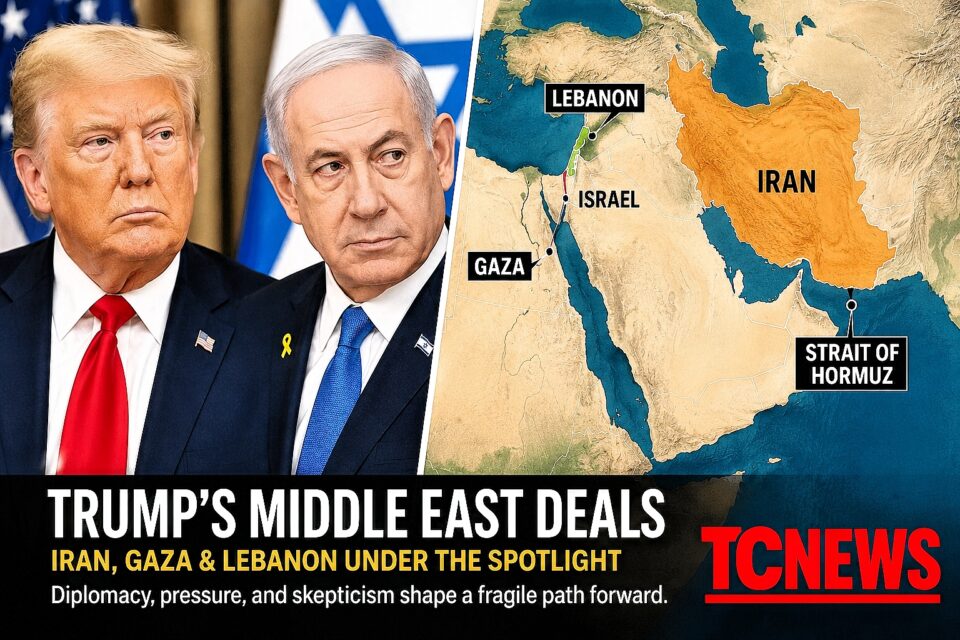
U.S. President Donald Trump’s renewed drive to secure diplomatic agreements across the Middle East is facing mounting skepticism, with analysts suggesting Israel remains strategically constrained while Iran, Hamas, and Hezbollah continue to resist major concessions.
The assessment comes amid Washington’s efforts to broker parallel understandings involving Iran, Gaza, and Lebanon, with the White House insisting diplomacy remains the preferred path despite repeated setbacks.
Trump Halts Planned Strike on Iran
Tensions surged over the weekend after reports indicated that the United States, with possible Israeli support, was preparing military strikes against Iranian energy-related targets following Tehran’s alleged threats against U.S. troops and continued influence over the Strait of Hormuz.
However, Trump later announced that he had suspended the planned operation, claiming Iran and other Middle Eastern countries had requested more time because the framework for a possible agreement had been reached.
According to Trump, the proposed understanding would include the reopening of the Strait of Hormuz and measures addressing Iran’s nuclear activities.
Iran, however, quickly rejected those claims, with senior officials insisting no such negotiations or concessions had been agreed upon.
The contrasting narratives have renewed questions about the effectiveness of Washington’s strategy toward Tehran.
Israel Watches Iran Talks with Caution
Israeli officials have remained cautious throughout the latest developments.
While Israel continues to regard Iran as its most significant long-term security threat, analysts believe Jerusalem has limited room to act independently because of Washington’s preference for diplomatic engagement.
Although the United States continues to maintain economic pressure on Tehran, critics argue that repeated threats followed by reversals may reduce American leverage and encourage Iran to maintain its current position.
Security observers also note that Iran continues to view control over the Strait of Hormuz as one of its strongest strategic bargaining tools.
Gaza Disarmament Plan Faces Major Questions
Beyond Iran, the Trump administration is also promoting a roadmap aimed at ending Hamas’ military control in Gaza.
The proposal reportedly envisions Hamas gradually surrendering its weapons while governance is transferred to a new Palestinian administrative authority.
Trump has described the initiative as a historic opportunity to prevent Hamas from rebuilding its military capabilities.
However, Israeli leaders remain unconvinced.
Israeli officials have repeatedly questioned whether Hamas genuinely intends to disarm, pointing to previous public statements by senior Hamas leaders rejecting any surrender of their weapons.
Although American officials argue the process is based on reciprocal implementation rather than trust, observers say significant uncertainties remain regarding enforcement and verification.
Lebanon Agreement Also Faces Challenges
A separate U.S.-backed framework involving Lebanon seeks to strengthen the Lebanese government’s authority while gradually reducing Hezbollah’s military influence.
While Lebanon’s government has expressed support for reforms, analysts question whether it possesses either the political will or military capability to compel Hezbollah to surrender its arsenal.
The group’s longstanding alliance with Iran continues to complicate efforts to achieve lasting disarmament.
Israel Balancing Security and Diplomacy
The evolving regional landscape has placed Israeli Prime Minister Benjamin Netanyahu in a delicate position.
On one hand, Israel remains dependent on close coordination with Washington.
On the other, Israeli security officials continue to express concern that negotiated agreements alone may not eliminate long-term threats posed by Iran and its regional allies.
Political considerations also add pressure, with Israel approaching another election cycle while regional security challenges remain unresolved.
Analysts believe Netanyahu is attempting to balance support for U.S. diplomatic initiatives without compromising Israel’s core security objectives.
Why This Matters
The success or failure of Trump’s diplomatic initiatives could significantly shape the future security landscape of the Middle East.
If negotiations succeed, they could reduce immediate regional tensions and prevent further military escalation.
However, if agreements fail to produce meaningful implementation, critics warn that Iran, Hamas, and Hezbollah could emerge with greater strategic flexibility while Israel continues to face persistent security threats.
The coming months are expected to determine whether diplomacy can deliver lasting stability or merely postpone future confrontations.
Frequently Asked Questions
Why did Trump cancel the reported strike on Iran?
Trump said potential diplomatic progress justified suspending military action, although Iranian officials denied agreeing to any new negotiations.
Why is Israel skeptical of the Gaza proposal?
Israeli leaders question whether Hamas will genuinely surrender its weapons, citing the group’s previous statements rejecting disarmament.
What is the Strait of Hormuz’s importance?
The Strait of Hormuz is one of the world’s most critical oil shipping routes, making it strategically significant for global energy markets.
Conclusion
The latest diplomatic efforts highlight the complex realities of Middle East politics. While the United States continues to pursue negotiated settlements with Iran, Hamas, and Lebanon, major questions remain over whether these agreements can translate into lasting security gains. For Israel, the challenge lies in supporting diplomatic initiatives without overlooking enduring regional threats.
Hashtags: #Trump #Israel #Iran #Gaza #MiddleEast #Netanyahu #Hamas #Hezbollah #USForeignPolicy #TCNEWS
