

By DAYO ADESULU
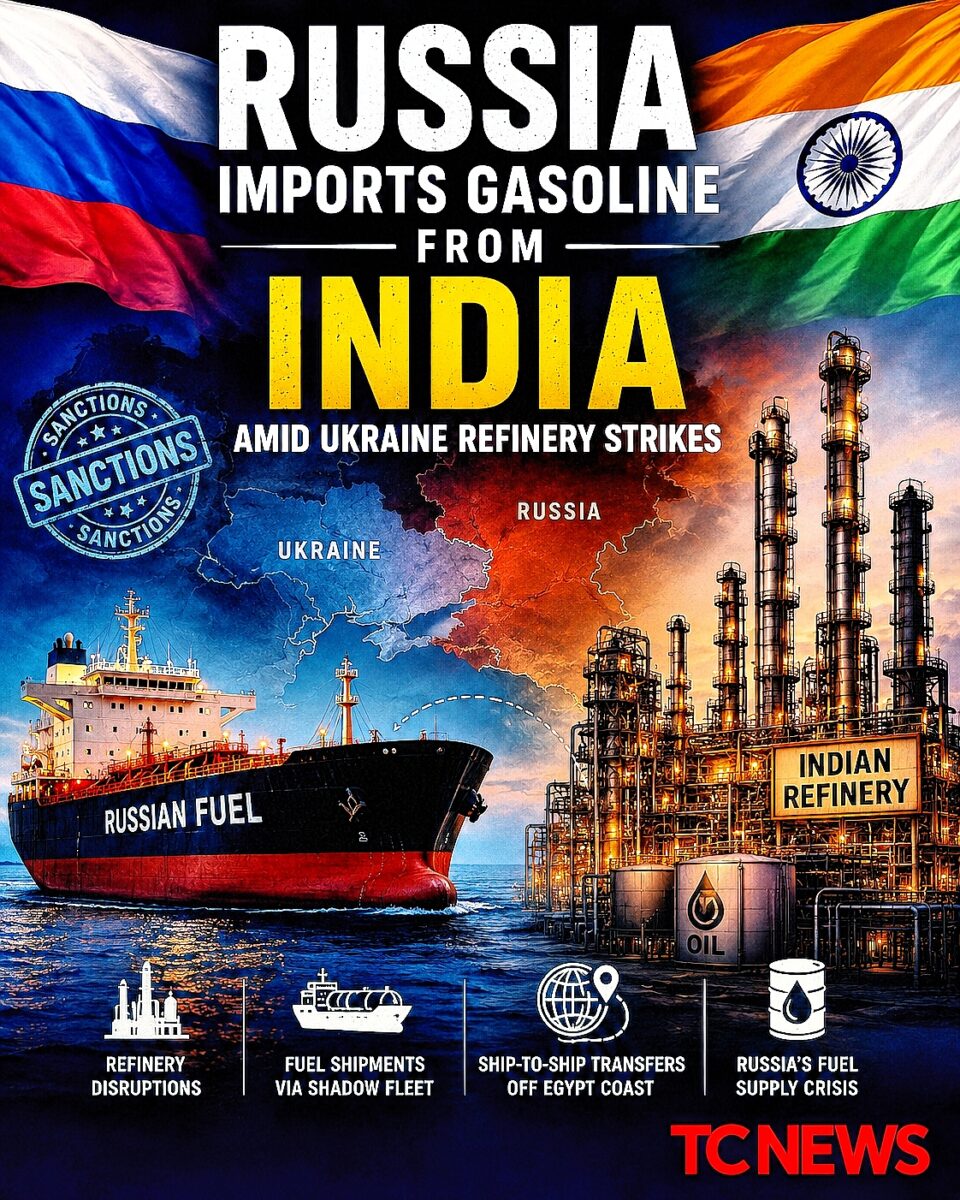
Russia has begun importing gasoline from India for the first time as repeated Ukrainian attacks on Russian oil refineries deepen a domestic fuel shortage, marking an unusual reversal for one of the world’s major petroleum exporters.
The first shipment of Indian gasoline reportedly arrived in Russia on August 5, according to shipping and commodity-tracking data cited by Kpler and reported by international media. The development highlights the growing strain on Russia’s refining system as Ukrainian strikes disrupt processing capacity.
The unusual trade route also illustrates how the war is reshaping global energy flows, with fuel reportedly moving through ship-to-ship transfers near Egypt before reaching Russian markets.
Russia’s Gasoline Imports Signal Deepening Fuel Pressure
Russia has historically been a major exporter of refined petroleum products. However, sustained attacks on its refineries have reduced the amount of gasoline available for the domestic market.
Kpler analyst Sumit Ritolia described the appearance of Indian gasoline in Russia as particularly significant. According to the analysis, the new shipments, alongside supplies from neighbouring countries such as Belarus, demonstrate the severity of the imbalance in Russia’s gasoline market.
The situation is especially notable because Moscow has previously restricted exports of gasoline and diesel in an effort to protect domestic supplies.
Russia’s dependence on imported gasoline therefore represents a sharp change in its traditional role in the global refined-fuel trade.
Ukrainian Strikes Hit Russia’s Refining Capacity
The worsening fuel situation is closely linked to Ukraine’s campaign against Russian energy infrastructure.
According to energy-market assessments cited in recent reports, Russian refinery throughput fell to about 3.6 million barrels per day in July. That level was roughly one-third below seasonal norms and represented one of the lowest points in Russia’s modern refining history.
Ukrainian forces have repeatedly targeted refineries and other oil infrastructure with drones and missiles.
The attacks are designed to impose economic pressure on Moscow by disrupting the processing of crude oil into gasoline, diesel and other petroleum products. While Russia continues to possess substantial crude-oil production capacity, producing crude is not enough to guarantee sufficient supplies of finished fuel.
That distinction is now becoming increasingly important.
From Fuel Exporter to Fuel Importer
Russia’s current predicament demonstrates the difference between having access to crude oil and having functioning refining capacity.
A refinery converts crude into usable products such as gasoline, diesel and aviation fuel. When processing facilities are damaged or forced to operate below capacity, a country can theoretically have abundant crude while still experiencing shortages of finished petroleum products.
That appears to be what is happening in parts of Russia.
The International Energy Agency also reported on August 12 that Russian oil refining remained near a 20-year low because of Ukrainian drone strikes, adding to broader pressure on global energy markets.
Indian Gasoline Takes an Unusual Route to Russia
The gasoline reportedly originated from Nayara Energy’s Vadinar refinery on India’s western coast.
Nayara operates a refinery with capacity of about 400,000 barrels per day and has significant Russian ownership through Rosneft. The European Union sanctioned Nayara in July 2025 over its links to Russia’s energy sector.
The first reported shipment involved the Russian-flagged tanker Cyclone, which loaded approximately 42,000 tonnes of gasoline at Vadinar on June 18.
The cargo was subsequently transferred to the Oman-flagged Garnet near Egypt’s Damietta port on July 6 before continuing toward Russia, according to the shipping data cited in the report.
The route is significant because ship-to-ship transfers can make petroleum shipments more complicated to trace and can allow vessels to change cargoes without returning to their original ports.
Shadow-Fleet Shipping Network Under Scrutiny
Additional Indian gasoline shipments reportedly followed.
A tanker identified as Varg left Vadinar carrying approximately 40,000 tonnes of gasoline on July 6. Kpler data indicated that the cargo may have been transferred near Damietta before being taken onward by another vessel.
A third tanker, Photon, reportedly departed Vadinar on July 13 and later transferred its cargo to the Russian-flagged Talisman near the Egyptian port.
Kpler said the final destinations of some of the vessels could not be independently confirmed. However, the emerging pattern indicates that Damietta is becoming an important transfer point for Indian-origin gasoline moving toward Russian-linked markets.
Several of the vessels involved are reportedly subject to Western sanctions. The United States has also sanctioned vessels including Garnet and Talisman, adding another layer of complexity to the trade.
Why Nayara Energy Is Central to the Story
Nayara Energy sits at the intersection of India’s expanding role in global oil trading and the sanctions pressure surrounding Russian energy.
The company operates the Vadinar refinery in Gujarat and is partly owned by Rosneft. The European Union imposed sanctions on the refinery in July 2025, arguing that the facility contributes to Russia’s energy revenues. Rosneft has rejected the sanctions and disputed the characterization of its ownership and control.
The new gasoline trade demonstrates how sanctions can redirect rather than necessarily eliminate energy flows.
Instead of disappearing from the international market, petroleum products can move through alternative buyers, ports, shipping companies and intermediary vessels.
That makes enforcement increasingly difficult.
A New Pressure Point in the Russia-Ukraine War
The gasoline shortage could become an important economic pressure point for Moscow if attacks continue and refinery repairs cannot keep pace with the damage.
Russia has several options. It can increase imports from friendly countries, draw down fuel stocks, redirect refinery output toward gasoline, or strengthen air and missile defenses around critical energy infrastructure.
However, each option carries costs.
Importing gasoline over long maritime routes is more expensive and complicated than relying on domestic refineries. At the same time, sanctions can make shipping, insurance and financial transactions more difficult.
For Ukraine, meanwhile, refinery strikes provide a way to attack Russia’s economic infrastructure without attempting to destroy the country’s enormous crude-oil reserves.
Global Energy Markets Face Additional Disruption
The Russian fuel crisis is developing against a broader backdrop of geopolitical uncertainty.
The International Energy Agency said global oil supply could fall sharply in 2026 amid renewed conflict in the Middle East, while Russian refining disruptions are adding further pressure to petroleum markets.
Consequently, disruptions in Russia could have consequences beyond its borders.
If Moscow needs to import more refined fuel, it could compete with other buyers for available gasoline and diesel cargoes. That could influence regional prices, shipping patterns and refinery margins.
For countries that rely heavily on imported petroleum products, including many African economies, changes in global refined-fuel flows could eventually affect procurement costs.
Why This Matters
Russia importing gasoline from India is more than an unusual energy transaction.
It is a visible sign of how the Ukraine war is altering the structure of global energy trade.
A country that has traditionally supplied fuel to international markets is now seeking gasoline from thousands of kilometres away because its domestic refining system is under sustained pressure.
The development also demonstrates the growing importance of alternative shipping networks and ship-to-ship transfers in a sanctions-heavy global oil market.
Most importantly, it shows that attacks on energy infrastructure can create consequences far beyond the immediate battlefield.
What Happens Next?
The key question is whether Russia can restore refinery capacity quickly enough to reduce its dependence on imports.
If Ukrainian attacks continue at their current intensity, Moscow may have to expand purchases from India and other suppliers.
That could increase the role of countries such as India in Russia’s refined-fuel supply chain while simultaneously creating new challenges for Western sanctions enforcement.
For global energy markets, the coming months will reveal whether Russia’s gasoline imports are a temporary emergency measure or the beginning of a more permanent shift in the country’s petroleum trade.
FAQs
Why is Russia importing gasoline from India?
Russia is importing gasoline because repeated Ukrainian attacks have disrupted domestic refinery operations and contributed to a shortage of finished fuel.
Is this the first time Russia has imported gasoline from India?
Reports indicate that the August 5 shipment represents the first recorded Indian gasoline imports into Russia, making the development particularly significant.
Which Indian company supplied the gasoline?
The gasoline reportedly came from Nayara Energy’s Vadinar refinery in Gujarat. The refinery has significant Russian ownership through Rosneft.
Why are the shipments transferred near Egypt?
Ship-to-ship transfers can provide greater logistical flexibility and allow cargoes to be moved between vessels before continuing toward their final destinations.
Could the fuel shortage affect global oil prices?
Potentially. Greater Russian demand for imported refined products could compete with other international buyers, while broader disruptions to global oil supply are already placing pressure on energy markets.
Conclusion
Russia’s first reported gasoline imports from India represent an extraordinary development in the energy dimension of the Ukraine war.
The shipments underscore the impact of sustained attacks on Russian refineries and demonstrate how Moscow is adapting its energy supply chains under pressure.
As refinery disruptions continue, the battle over Russia’s energy infrastructure could become just as important economically as developments on the battlefield.
For India, the trade highlights its growing influence in global energy markets. For Russia, it is a sign that even a major oil producer can become vulnerable when its refining infrastructure is repeatedly disrupted.
And for the wider world, it offers another reminder that modern conflicts can rapidly redraw the routes through which energy reaches consumers.
👇 What do you think? Is this a temporary setback for Moscow or a major turning point in the Ukraine war?
#Russia #India #Ukraine #RussiaUkraineWar #NayaraEnergy #Rosneft #Oil #Gasoline #EnergyCrisis #GlobalEnergy #Geopolitics #TCNEWS
