

By DAYO ADESULU
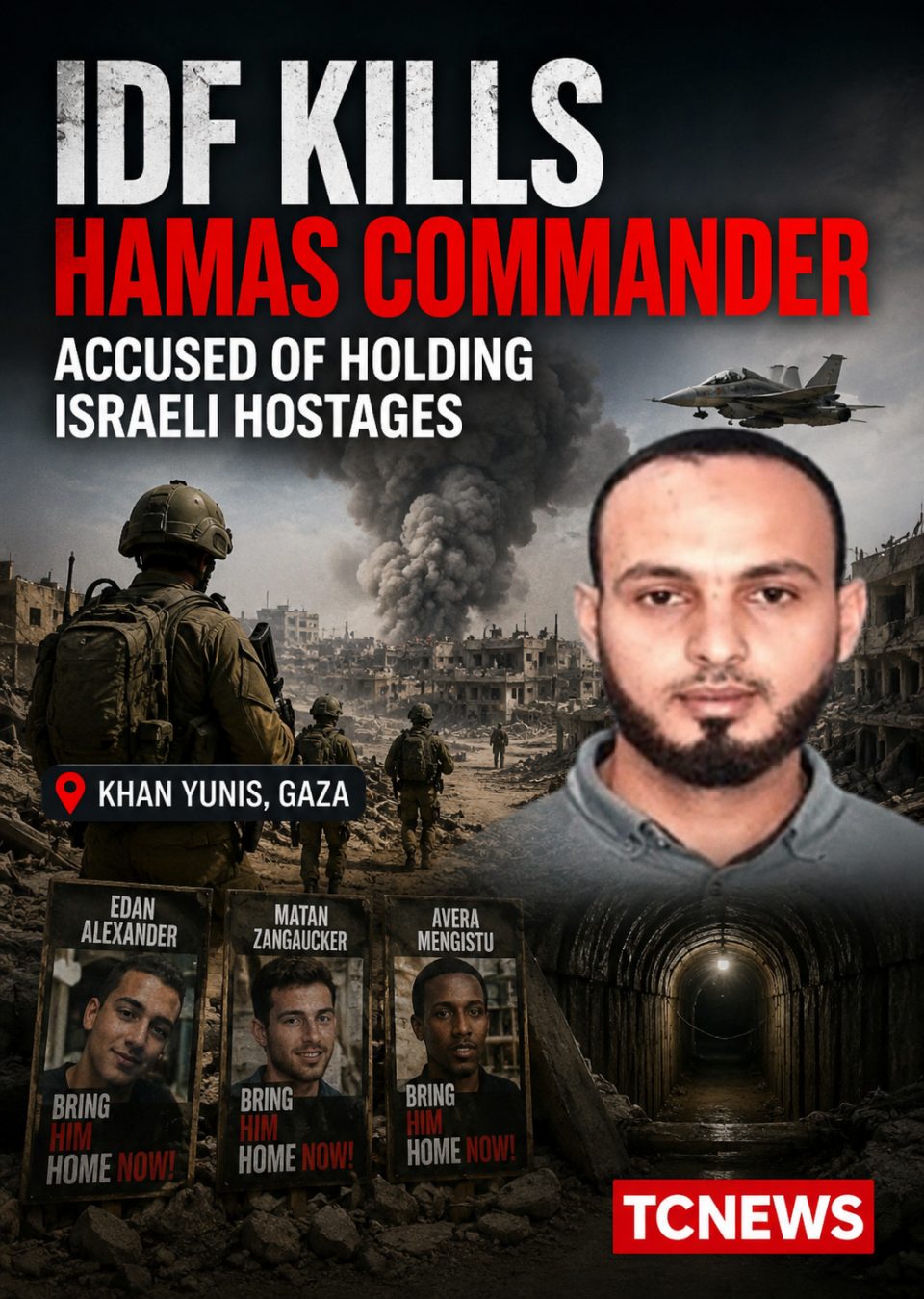
The Israel Defense Forces (IDF) has announced the killing of a Hamas military-wing commander who it says was involved in holding hostages Edan Alexander, Matan Zangauker and Avera Mengistu inside a tunnel in the southern Gaza Strip.
According to the IDF, the strike took place on Wednesday in the Khan Yunis area, where Ismail Mohammed Ibrahim Barim, described as a commander in Hamas’ military wing, was targeted and killed.
The announcement comes amid continued tensions surrounding the Gaza ceasefire, with Israel accusing Hamas operatives of attempting to rebuild their military capabilities and carry out attacks despite the truce.
IDF Identifies Hamas Commander Killed in Khan Yunis
The IDF said Barim was a Hamas commander who had previously been involved in holding hostages in an underground tunnel in southern Gaza.
The three hostages named by the Israeli military are Edan Alexander, Matan Zangauker and Avera Mengistu.
Edan Alexander, an Israeli-American soldier, was among the hostages taken during the October 7, 2023, Hamas-led attack on Israel. Matan Zangauker was also abducted during the attack, while Avera Mengistu had been held in Gaza for years after entering the territory in 2014.
The IDF did not provide additional details about the circumstances surrounding Barim’s alleged involvement in holding the three hostages.
However, the military said his activities had recently extended beyond hostage-related operations.
Israel Accuses Hamas Commander of Ceasefire Violations
According to the IDF, Barim had recently been advancing attacks against Israeli civilians and IDF troops.
The military also accused him of working to rehabilitate Hamas’ military capabilities while systematically violating the ceasefire agreement.
The IDF said the strike was therefore carried out to eliminate what it described as an immediate threat.
The announcement reflects Israel’s continuing position that military operations can be conducted against individuals it considers an imminent security threat, even while ceasefire arrangements remain in effect.
The IDF has repeatedly said that its forces will respond to threats from Hamas and other armed groups operating in Gaza.
IDF Says Southern Command Forces Remain Deployed
The Israeli military said troops operating under the Southern Command remain deployed in the Gaza area in accordance with the ceasefire agreement.
The IDF added that its forces would continue operating to remove immediate threats to Israeli troops and civilians.
The statement did not provide further details about the size of the operation or whether the strike resulted in additional casualties.
The development highlights the fragile nature of the Gaza ceasefire, where allegations of violations by both sides continue to create pressure around the implementation of the agreement.
Who Are the Hostages Named by the IDF?
The three men referenced in the IDF statement have different backgrounds but were all connected to the long-running hostage crisis stemming from the Gaza conflict.
Edan Alexander was serving in the Israeli military when he was captured during the October 7 attack. His case attracted particular attention in the United States because of his American citizenship.
Matan Zangauker was abducted from his home in Kibbutz Nir Oz during the Hamas attack. His mother, Einav Zangauker, became a prominent campaigner for the release of hostages.
Avera Mengistu, an Israeli citizen of Ethiopian origin, entered Gaza in 2014 and was subsequently held by Hamas. His case predates the current war by several years.
The IDF’s claim that Barim participated in holding these hostages adds another dimension to Israel’s account of his role within Hamas.
Why This Matters
The killing of a Hamas commander allegedly involved in holding hostages carries significance beyond the immediate military operation.
First, it underscores the continued importance of the hostage issue in Israel’s military and political calculations. The fate of hostages and former hostages remains a central issue in discussions surrounding the Gaza conflict.
Second, the strike demonstrates the difficulty of maintaining a ceasefire while Israel continues to identify and target individuals it says pose an immediate threat.
Third, the IDF’s accusation that Hamas is attempting to rebuild its military infrastructure could signal further confrontation if Israeli authorities determine that ceasefire violations are increasing.
For civilians in Gaza and Israel, however, continued military activity also raises concerns about renewed escalation and the potential humanitarian consequences.
Ceasefire Remains Under Pressure
Although the IDF maintains that its forces remain positioned in accordance with the ceasefire agreement, the reported killing illustrates the challenges of sustaining a truce in an environment where armed groups remain active.
Israel says its military presence is necessary to prevent attacks and remove immediate threats. Hamas and other Palestinian groups have previously disputed Israeli accounts of military activity and ceasefire violations.
As a result, each reported strike risks further straining an already fragile arrangement.
The latest development will likely draw renewed attention to the implementation of the ceasefire, the status of remaining hostages and the ability of both sides to prevent isolated military incidents from developing into a broader escalation.
What Happens Next?
The immediate focus is likely to remain on whether the ceasefire holds following the reported strike in Khan Yunis.
The IDF has made clear that Southern Command forces will continue operating against what it considers immediate threats. That position could lead to further Israeli military actions if commanders identify additional Hamas operatives attempting to conduct attacks or rebuild military capabilities.
At the same time, continued international and regional pressure is expected to focus on preserving the ceasefire and preventing a return to large-scale fighting.
The situation remains fluid, and further developments could determine whether the latest operation remains an isolated incident or contributes to wider tensions across Gaza.
Conclusion
The IDF says it has killed Hamas military-wing commander Ismail Mohammed Ibrahim Barim in Khan Yunis, accusing him of involvement in holding hostages Edan Alexander, Matan Zangauker and Avera Mengistu in an underground tunnel in southern Gaza.
Israel also alleges that Barim had recently been involved in planning attacks against Israeli civilians and soldiers and efforts to restore Hamas’ military capabilities.
With Israeli troops continuing to operate under the Southern Command, the incident highlights the continuing challenges facing the Gaza ceasefire and the risks of further escalation.
⚠️ With the ceasefire already under pressure, could this latest operation trigger further escalation?
What do you think?
#IDF #Hamas #Gaza #Israel #Hostages #KhanYunis #GazaCeasefire #IsraelHamasWar #TCNEWS
