

By Dayo Adesulu
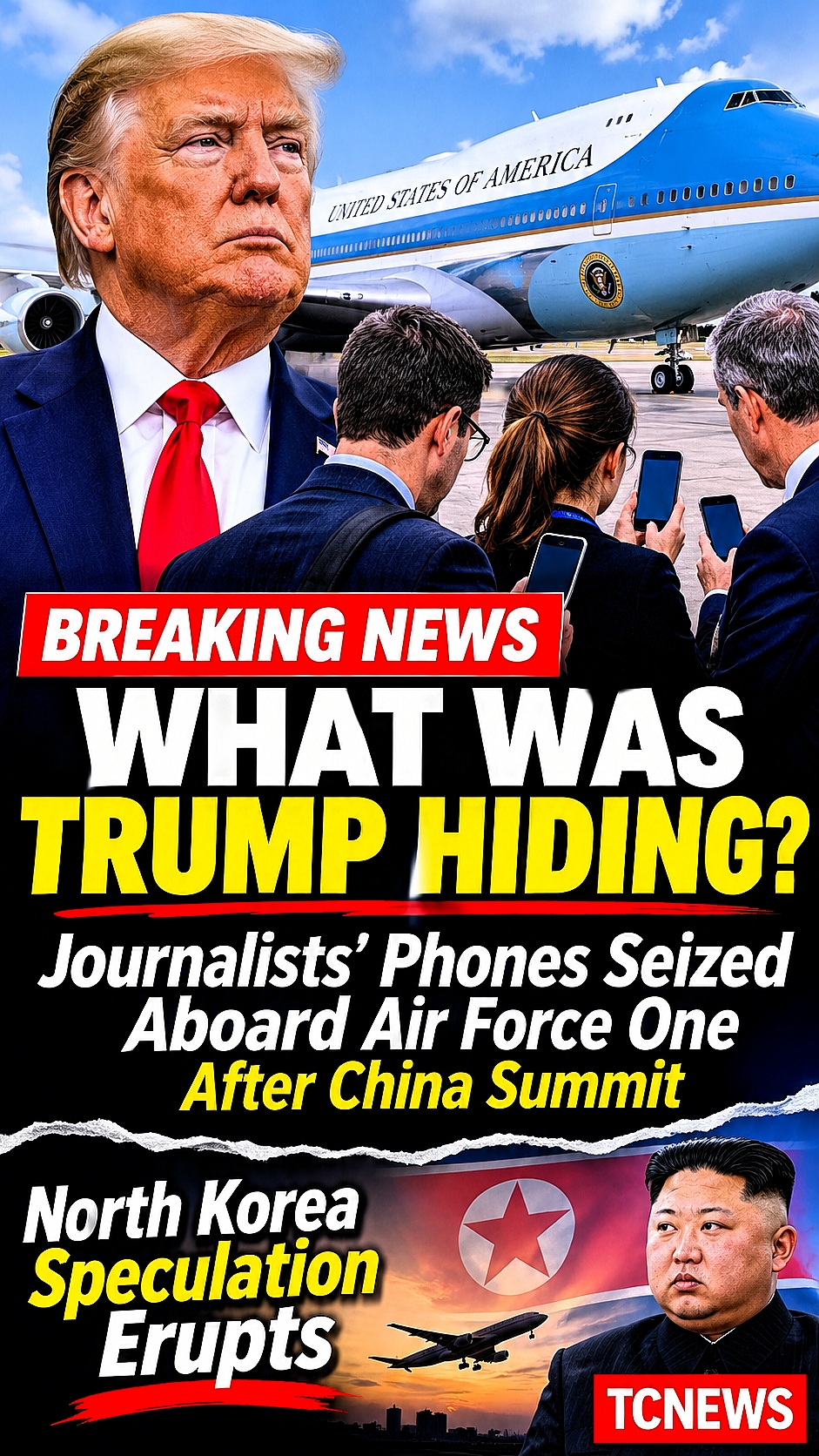
An unusual security operation aboard US President Donald Trump’s Air Force One has triggered international speculation after American officials reportedly collected or isolated journalists’ mobile phones as the presidential aircraft departed China.
The development, which caught members of the travelling White House press corps off guard, raised questions about the president’s destination, the security arrangements surrounding his Asian trip and whether an unexpected diplomatic encounter could still be on the agenda.
Although US officials reportedly justified the measure on security grounds, the timing of the operation, combined with developments surrounding the aircraft’s flight restrictions, fuelled speculation that Trump might have been preparing for an unexpected stopover.
Attention quickly turned to North Korea, where Trump has repeatedly expressed interest in meeting its leader, Kim Jong Un.
However, subsequent reports established that Air Force One returned directly to the United States, without any confirmed North Korean stopover.
Journalists’ Phones Isolated as Air Force One Leaves China
The incident unfolded on Thursday, November 19, 2026, as Trump departed Shenzhen following his Asian diplomatic engagements.
AFP correspondent Aurelia End alerted colleagues shortly before takeoff that journalists travelling with the president had been instructed to surrender their phones temporarily.
In a message sent at approximately 6:45 pm, she wrote: “At 6:45 pm consider this your wheels up. Our phones are being taken away for now for security reasons.”
NBC correspondent Garrett Haake also confirmed that officials had instructed journalists accompanying Trump to hand over their devices.
The procedure reportedly surprised experienced White House correspondents because journalists ordinarily retain access to their communication devices during presidential flights.
Jacqui Heinrich of Fox News, who leads the White House Correspondents’ Association, also raised questions about the unusual restrictions.
However, subsequent explanations offered a more specific account of the security operation.
Reports indicated that officials placed phones used by journalists in China inside Faraday bags, which prevent electronic devices from transmitting or receiving wireless signals.
The measure reportedly aimed to reduce potential cybersecurity risks associated with devices that had been exposed to networks in China.
Why Did the White House Fear China’s Electronic Surveillance?
The phone restrictions have drawn attention to the growing cybersecurity concerns surrounding international presidential travel.
China remains a major global technology power, but Western governments have repeatedly raised concerns about electronic surveillance, espionage and the security of communications devices.
Mobile phones can expose users to several security risks, including malicious software, unauthorised data collection and attempts to intercept communications.
Faraday bags provide an additional layer of protection by blocking radio-frequency signals. Consequently, a device inside one cannot communicate normally with mobile networks, Wi-Fi or Bluetooth.
Reports also indicated that White House personnel had taken precautions involving temporary phones used during the China visit.
This suggests that the operation formed part of a broader effort to protect sensitive communications and prevent possible electronic surveillance.
Nevertheless, officials have not publicly identified a specific successful hacking attempt against the journalists’ devices.
North Korea Speculation Intensifies
Despite the cybersecurity explanation, the incident generated another question: Was Trump considering an unexpected meeting with North Korean leader Kim Jong Un?
The speculation gained momentum because Trump has repeatedly expressed his willingness to meet Kim during his Asian engagements.
The American president has previously held historic face-to-face meetings with the North Korean leader, making another encounter a possibility that international observers continue to monitor.
However, no meeting took place during the China summit.
The unusual phone restrictions therefore became a subject of speculation, particularly after reports emerged about flight restrictions over Alaska that had potentially been connected to a refuelling arrangement.
Heinrich questioned whether the developments suggested that Air Force One might not be returning directly to Washington.
The questions became even more significant because journalists reportedly did not face the same restrictions when Trump departed Beijing during his earlier May visit.
Still, there was no confirmed evidence that the phone operation had anything to do with a planned North Korean meeting.
Air Force One Returns to the United States
Subsequent reporting provided an answer to the growing mystery surrounding Trump’s destination.
Air Force One returned to the United States after approximately 15 hours in the air, without a confirmed diversion to North Korea.
Reports also indicated that the aircraft did not make the anticipated refuelling stop in Alaska.
Journalists reportedly regained access to their phones after the aircraft landed in the United States.
The development effectively ended speculation that the presidential aircraft had secretly diverted to meet Kim Jong Un.
However, the episode has renewed discussions about the security procedures surrounding presidential travel and the challenges facing journalists who accompany the American president.
Trump and Putin’s Unusual Encounter Adds to Summit Drama
The phone controversy was not the only moment from the China summit that attracted international attention.
Another striking moment involved Trump and Russian President Vladimir Putin.
During the gathering, Trump reportedly spotted Putin across the room, pointed towards him and jokingly asked, “Who is that?”
He subsequently approached the Russian leader, shook his hand and described him as his friend.
The exchange attracted attention because of the complicated relationship between Washington and Moscow, particularly over Russia’s ongoing war in Ukraine and disagreements surrounding international security.
The encounter provided another memorable moment from a summit that brought together three influential world leaders: Trump, Putin and Chinese President Xi Jinping.
Why This Matters
The Air Force One phone controversy highlights the growing importance of cybersecurity in international diplomacy.
Presidential travel involves sensitive communications, intelligence assessments and security arrangements that can expose government officials to electronic surveillance.
However, restricting journalists’ access to communication devices also raises questions about press freedom, transparency and the public’s right to receive timely information about presidential activities.
Although security considerations can justify extraordinary precautions, journalists remain an important part of the democratic process.
The incident also demonstrates how seemingly routine security decisions can generate international speculation when officials provide limited explanations.
What Happens Next?
With Trump back in the United States, attention will likely return to his administration’s diplomatic priorities, particularly relations with China, Russia and North Korea.
Whether Trump will eventually meet Kim Jong Un again remains an open question.
For now, the available evidence points to a cybersecurity precaution rather than a secret diplomatic mission.
Nevertheless, the unusual decision to isolate journalists’ phones aboard Air Force One has ensured that Trump’s departure from China became one of the most talked-about moments of his Asian trip.
Frequently Asked Questions
1. Why were journalists’ phones taken aboard Air Force One?
Reports indicated that phones used during the China visit were placed in Faraday bags to prevent possible electronic surveillance and cybersecurity risks.
2. Was Trump travelling to North Korea?
There was speculation about a possible meeting with Kim Jong Un, but no confirmed evidence supported that theory. Air Force One returned to the United States.
3. What is a Faraday bag?
It is a protective enclosure that blocks wireless signals, preventing electronic devices from communicating with external networks.
4. Did Trump meet Vladimir Putin in China?
Yes. The two leaders greeted each other during the summit, and Trump described Putin as his friend.
5. Did journalists recover their phones?
Subsequent reports indicated that journalists regained access to their devices after landing in the United States.
#DonaldTrump #AirForceOne #ChinaSummit #NorthKorea #KimJongUn #VladimirPutin #WhiteHouse #TCNEWS
