

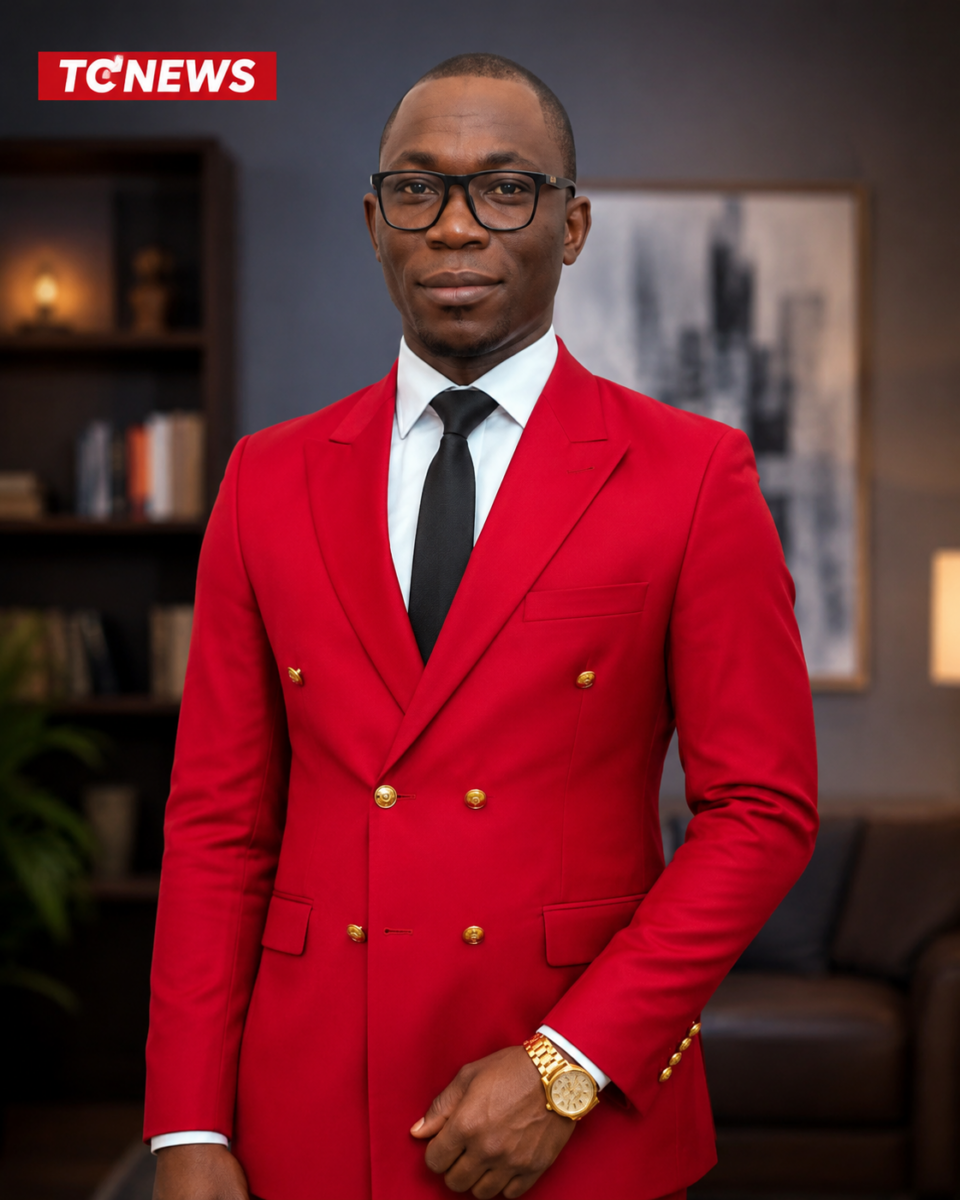
By DAYO ADESULU
The Story of a Nigerian Graduate Who Refused to Let a Mistake Define His Life
When Adebayo Afolabi Victor graduated from the Federal University of Technology Akure (FUTA) in 2007, he should have been celebrating the end of years of hard work.
Instead, he began a battle that would consume the next 19 years of his life.
On paper, Victor was a Mechanical Engineering graduate with a Second Class Lower degree. To many people, that would have been good enough. Friends would have advised him to move on. Family members would have urged him to focus on his future rather than fight a system that rarely admits mistakes.
But Victor carried a burden that would not let him rest.
He believed the degree classification attached to his name was not the one he earned.
According to him, errors in the marking and processing of some examination scripts had altered the trajectory of his academic record. The difference may have looked small to outsiders—a Second Class Lower instead of a Second Class Upper—but Victor understood what that difference could mean.
Scholarships.
Career opportunities.
Professional advancement.
And perhaps most importantly, the truth.
For him, it was never just about a grade. It was about justice.
The Fight Everyone Thought He Would Abandon
Victor first approached the university through official channels. He submitted complaints and requested a review of the courses he believed were affected.
Nothing changed.
Years passed.
Most people would have accepted defeat. Some would have blamed fate. Others would have convinced themselves that the battle was no longer worth fighting.
Victor chose a different path.
In 2011, he took the matter to court.
What followed was not a legal case. It became a test of endurance.
The case travelled through multiple courts. There were setbacks, delays, dismissals, appeals, retrials and fresh hearings. Judges changed. Years rolled by.
Nigeria changed presidents.
Governors came and went.
Children were born and grew into teenagers.
Yet one man continued pursuing the same question:
“Was I awarded the degree I truly earned?”
Nineteen Years of Waiting
Imagine carrying the same grievance for nearly two decades.
Imagine watching opportunities pass by while a dispute remains unresolved.
Imagine being told repeatedly to let go.
Victor did not.
What makes the story even more extraordinary is that he was not a lawyer when this journey began. He simply refused to accept what he believed was an injustice.
While many people measure success by how quickly they achieve results, Victor’s story became a lesson in persistence.
He kept going.
Year after year.
Court after court.
Hearing after hearing.
The Moment the Truth Emerged
Eventually, the legal process forced a fresh review.
Acting on court directives, FUTA re-examined the disputed scripts through the appropriate academic procedures.
The outcome changed everything.
The review confirmed Victor’s long-held claim.
His degree classification had indeed been wrongly computed.
The university upgraded his result from a Second Class Lower Division to a Second Class Upper Division and issued a corrected transcript and certificate.
After nearly two decades, the record finally reflected what he had been saying all along.
He was right.
A Victory Bigger Than One Man
For the Supreme Court, however, the case was about far more than Victor’s certificate.
In a landmark judgment delivered on December 12, 2025, the apex court sent a powerful message to educational institutions across Nigeria.
Universities may enjoy academic independence, but they are not beyond accountability.
The court held that institutions owe students a duty of care in handling examination scripts, results, academic records and complaints. When that duty is breached, the courts have the authority to intervene.
The judgment transformed Victor’s personal struggle into a precedent that could protect thousands of students in the future.
The Cost of Being Right
The Supreme Court recognised that the consequences of the error extended beyond academic records.
Victor argued that he lost valuable opportunities because of the wrong classification, including a fully funded postgraduate scholarship that required a stronger degree result.
The court agreed that the impact of the mistake had been significant.
It increased the damages previously awarded from ₦500,000 to ₦18 million and added ₦2 million as litigation costs, bringing the total award to ₦20 million.
But perhaps the greatest compensation was not financial.
It was vindication.
For 19 years, Victor carried a belief that many people doubted.
In the end, the highest court in the land confirmed that he had been telling the truth.
A Lesson for Every Nigerian
Victor’s story is not really about a degree.
It is about refusing to surrender when the system says you should.
It is about believing that accountability matters, even when achieving it takes years.
It is about the courage to keep going when victory seems impossible.
Nineteen years after leaving university, Adebayo Afolabi Victor finally received the classification he believed he earned.
But in doing so, he achieved something far greater.
He proved that persistence can outlast bureaucracy, that justice delayed is not always justice denied, and that one determined individual can leave a mark on history.
The question is simple:
If you believed you were right, would you have fought for 19 years?
