

By Henry Olalekan Adebodun
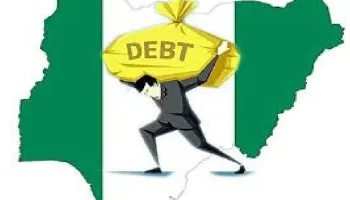
As Nigeria’s debt burden continues to balloon, alarm bells are ringing across the nation’s economic, political, and private sectors. Recent reports from the Debt Management Office (DMO) confirm that Nigeria’s public debt has reached a staggering ₦149.39 trillion as of March 2025 — an all-time high that represents a 22.8% year-on-year increase. The figures are not just numbers on paper; they reflect a deepening crisis that could have far-reaching consequences for Nigeria’s economic stability and national development.
This worrisome rise in the nation’s debt is being driven largely by two key factors: relentless borrowing and a free-falling naira. The naira has depreciated by nearly 700% since 2015, making the cost of repaying foreign loans increasingly unbearable. What was once seen as manageable external debt has now become a financial millstone, as the country scrambles to convert ever-weaker naira into dollars to service its obligations.
The debt profile is not only expanding, but also becoming unsustainable. In 2015, Nigeria’s total debt stood at just ₦12.6 trillion. Fast-forward to 2025, and the figure has exploded by over 1,000%. Analysts now warn that Nigeria is sliding dangerously toward a debt trap, where new loans are borrowed merely to pay off existing ones. This borrowing cycle, if not arrested, could tip the country toward sovereign default — a scenario with severe consequences for foreign investment, inflation, and national security.
What makes the situation even more troubling is the absence of proportional economic growth. Despite this massive debt increase, Nigeria’s infrastructure remains largely underdeveloped, and capital projects are either abandoned or underfunded. Instead, a significant portion of the borrowed funds is channeled toward recurrent expenditure and debt servicing, leaving very little for productive investment.
Furthermore, revenue mobilization remains dismally low. Nigeria’s tax-to-GDP ratio is among the lowest in the world, and efforts to diversify the economy away from oil have been largely rhetorical. With dwindling oil revenues, rising inflation, and a widening fiscal deficit, the government finds itself cornered: borrowing more, achieving less, and placing the burden on future generations.
The private sector is raising the alarm, warning that the government’s borrowing spree is crowding out private investment and weakening investor confidence. A weaker naira, higher interest rates, and rising inflation are shrinking the purchasing power of citizens and increasing the cost of doing business. For ordinary Nigerians, this translates to job losses, higher food prices, and eroded savings.
What Must Be Done?
The time to act is now. The Federal Government must:
1. Stop borrowing for consumption and instead prioritize capital investments with measurable impact.
2. Strengthen tax collection systems to improve revenue without increasing the tax burden on struggling citizens.
3. Cut wasteful spending, especially on non-essential governance and subsidies that have become fiscal black holes.
4. Pursue transparency and accountability in loan management, ensuring that every naira borrowed is traceable and impactful.
5. Invest in local production to reduce import dependency and ease pressure on the naira.
It is not enough for policymakers to cite a manageable debt-to-GDP ratio — the lived reality for millions of Nigerians is economic hardship rooted in fiscal mismanagement and short-term thinking. Nigeria must rethink its debt strategy before the burden becomes irreversible.
The nation stands at a crossroads. Will it continue down the dangerous path of unsustainable borrowing, or will it embrace tough but necessary reforms to secure a prosperous future? The answer lies in urgent, honest, and courageous leadership.
Olalekan Henry (Mr.) is a public affairs analyst and Educator. He writes from Abeokuta. He can be reached via
adebodunolalekan@gmail.com
