

By DAYO ADESULU
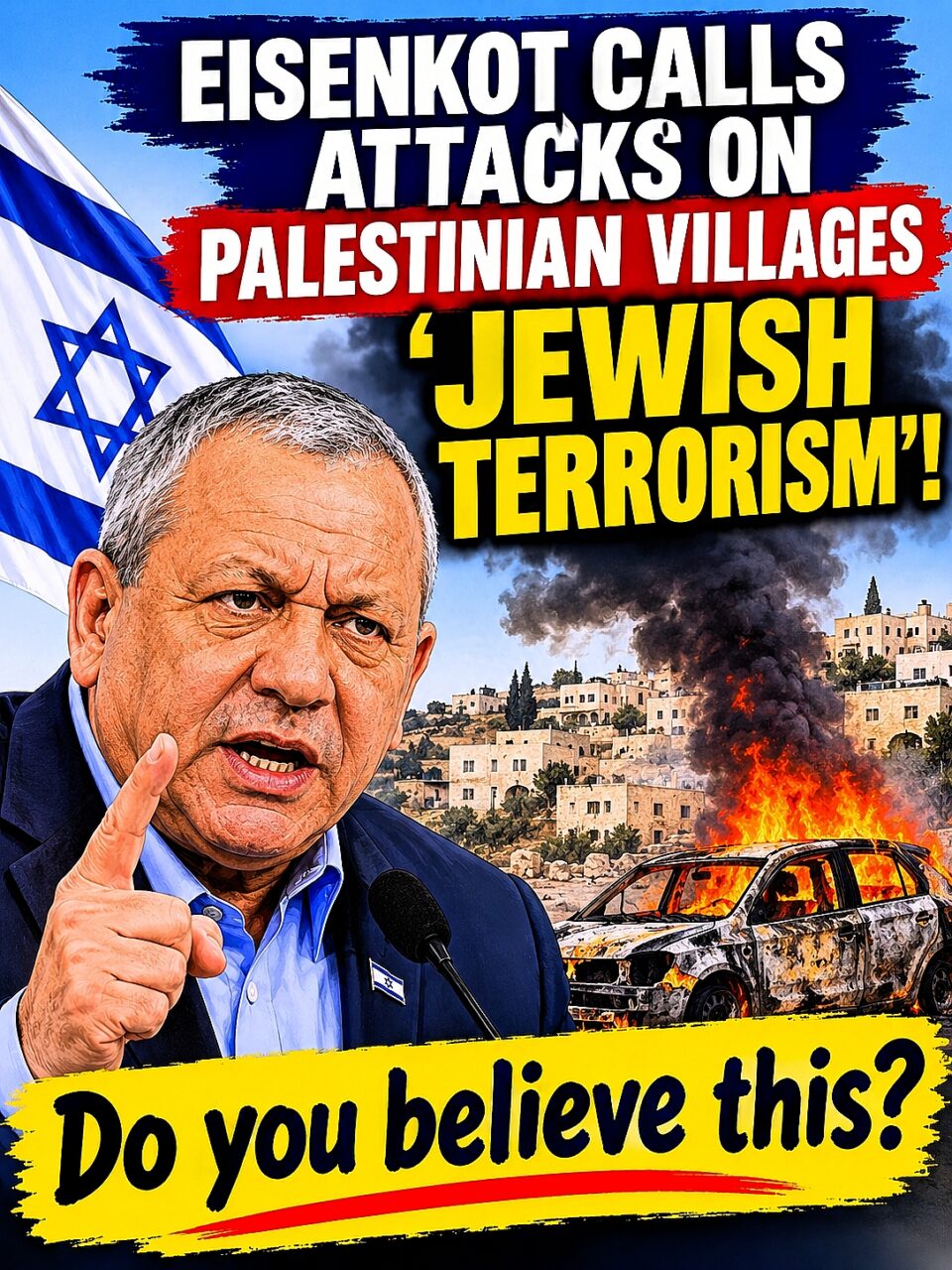
Israeli opposition politician Gadi Eisenkot has condemned a series of overnight arson attacks targeting Palestinian communities in the occupied West Bank, describing the incidents as “Jewish terrorism” while accusing two senior ministers of contributing to the deteriorating security situation.
The attacks, which reportedly affected at least four Palestinian communities, have intensified political tensions in Israel, with opposition leaders demanding tougher action against extremist Jewish groups.
Eisenkot, chairman of the Yashar party and a former Israel Defense Forces (IDF) chief of staff, made the remarks on Sunday, November 22, 2026, following reports that Palestinian-owned homes, vehicles and other properties were targeted in overnight attacks.
He specifically criticised National Security Minister Itamar Ben-Gvir and Finance Minister Bezalel Smotrich, accusing them of encouraging policies that have pushed the occupied West Bank towards lawlessness.
Eisenkot: ‘This Is Jewish Terrorism’
Reacting to the incidents, Eisenkot described the attacks as terrorism, arguing that violence against Palestinian civilians and their property threatens Israel’s security and international standing.
“The night of arson attacks in Judea and Samaria is Jewish terrorism in every sense of the word, and it must be called by its name,” he said.
According to the opposition politician, extremist groups responsible for setting vehicles and homes ablaze are undermining regional stability and putting human lives at risk.
He further warned that such incidents damage Israel’s national security and foreign relations at a time when the country faces significant regional challenges.
Eisenkot directly blamed Ben-Gvir and Smotrich for what he described as the deteriorating security environment, arguing that their policies had brought the West Bank to the brink of unchecked anarchy.
He called on the Israeli government and security agencies to deploy every available measure to prevent further attacks.
These measures, he suggested, should include administrative detention and targeted operations by Israel’s domestic intelligence agency, Shin Bet.
Four Palestinian Communities Reportedly Targeted
The overnight attacks reportedly affected at least four locations across the occupied West Bank, particularly in the Ramallah area and the South Hebron Hills.
The communities identified in reports include Deir as-Sudan, Kafr Malik, Deir Abu Mashal and At-Tuwani.
Footage from the affected locations reportedly showed Palestinian-owned vehicles and properties either set ablaze or targeted in attempted arson attacks.
The attackers also allegedly left Hebrew graffiti at some of the scenes.
Among the messages reportedly written on properties were the words “Revenge” and “Through blood and fire Judea fell, through blood and fire Judea will rise”.
The slogans have raised further concerns about extremist nationalist activities and the potential for additional violence between Israeli settlers and Palestinians.
However, investigations into the attacks remain ongoing, and the identities of those responsible have not been officially established.
Israeli Police and Military Open Investigation
Israel Police and the IDF confirmed that investigations had commenced following the reported incidents.
Forensic investigators from the Judea and Samaria District were expected to examine the affected locations and collect evidence.
The Israeli military also condemned the attacks, describing them as actions that disrupt public order and interfere with security operations.
The IDF said the incidents divert attention from its operational responsibilities, including counterterrorism activities.
The investigations will be important in determining who carried out the attacks and whether organised extremist groups were involved.
Ben-Gvir Fires Back at Eisenkot
The accusations triggered a sharp response from National Security Minister Itamar Ben-Gvir, who criticised Eisenkot for publicly describing the incidents as Jewish terrorism before investigators had established the facts.
In a statement posted on X, Ben-Gvir accused the former military chief of exploiting the situation for political advantage.
“Eisenkot has no idea about the facts or the investigation, yet he rushes to declare it Jewish terrorism, demands administrative detention, and wants to throw them into the Shin Bet’s basements,” Ben-Gvir said.
He also accused Eisenkot of attempting to appeal to Arab political figures, particularly lawmaker Ahmad Tibi, ahead of a possible future coalition government.
Ben-Gvir claimed the opposition politician was making “an advance payment” to Tibi in anticipation of forming a government with the support of what he described as terrorism supporters.
His response highlights the growing political divisions within Israel over security policy, settler violence and the government’s handling of the occupied West Bank.
Other Israeli Opposition Leaders Raise Alarm
Eisenkot was not the only Israeli opposition figure to condemn the reported attacks.
Democrats chairman Yair Golan warned that the security situation in the West Bank could deteriorate into a third intifada, referring to previous Palestinian uprisings against Israeli occupation.
Golan accused the government of giving encouragement to Jewish extremist violence while failing to provide adequate security.
Meanwhile, Joint List chairman Yousef Jabareen argued that attacks by extremist settlers should not be viewed as isolated incidents.
He described what he called settler terrorism as a consequence of the prolonged occupation and government policies.
Their reactions demonstrate that concern over extremist violence extends beyond one political faction, although Israeli politicians remain sharply divided over the appropriate response.
Growing Concerns Over Settler Violence
The latest incidents come amid reports of several suspected nationalist-motivated attacks against Palestinian property in recent weeks.
Previous incidents reportedly involved arson attacks targeting vehicles, construction equipment and other privately owned assets.
The recurring nature of these incidents has intensified concerns about the security of Palestinian communities in the occupied West Bank.
It has also placed additional pressure on Israeli security agencies to identify suspects, prevent retaliatory violence and hold perpetrators accountable.
For Palestinians living in affected communities, attacks on homes, vehicles and businesses create immediate security concerns and threaten their livelihoods.
Meanwhile, the political confrontation between Eisenkot and Ben-Gvir reflects a broader disagreement within Israel over how the government should address extremist violence.
Why This Matters
The West Bank remains one of the most sensitive flashpoints in the Israeli-Palestinian conflict.
Attacks against Palestinian communities can deepen hostility, encourage retaliatory violence and complicate efforts to maintain security across the territory.
Furthermore, allegations of extremist violence involving Israeli settlers carry significant political and diplomatic consequences for Israel.
The controversy also exposes divisions within Israeli politics, particularly over the responsibilities of government ministers and the role of security agencies in preventing attacks.
As investigations continue, attention will focus on whether Israeli authorities can identify those responsible and prevent further violence.
Frequently Asked Questions
1. What did Gadi Eisenkot say about the West Bank attacks?
Eisenkot described the overnight arson attacks targeting Palestinian communities as “Jewish terrorism” and demanded stronger action against the perpetrators.
2. Which Israeli ministers did Eisenkot criticise?
He accused National Security Minister Itamar Ben-Gvir and Finance Minister Bezalel Smotrich of contributing to the deteriorating security situation in the West Bank.
3. Which Palestinian communities were reportedly attacked?
The reported locations include Deir as-Sudan, Kafr Malik, Deir Abu Mashal and At-Tuwani.
4. How did Ben-Gvir respond?
Ben-Gvir accused Eisenkot of rushing to make political accusations before investigators had established the facts.
5. Have Israeli authorities opened an investigation?
Yes. Israel Police and the IDF confirmed that investigations had commenced, with forensic investigators expected to collect evidence.
Conclusion
The reported arson attacks in the occupied West Bank have sparked fresh political confrontation in Israel, with Gadi Eisenkot demanding accountability and accusing senior government ministers of allowing extremist violence to escalate.
While Israeli authorities investigate the incidents, the exchange between Eisenkot and Ben-Gvir underscores the growing political and security challenges surrounding the Israeli-Palestinian conflict.
The central question now is whether the investigations will identify those responsible and whether the government will take decisive steps to prevent further attacks against Palestinian communities..
Hashtags: #GadiEisenkot #WestBank #Israel #Palestine #JewishTerrorism #BenGvir #IsraeliPolitics #MiddleEastNews #TheCheerNews
